Finding the right tools to track your daily intake can feel like a chore. Using one of the best digital kitchen food scales for macro tracking helps take the guesswork out of your meals. Whether you’re counting protein, fats, or total calories, these devices help you stay consistent with your goals.
This guide covers a range of scales, from simple offline models to those that sync with mobile apps. We chose these products by looking at their listed features, material quality, and how they fit different user needs. We didn’t perform hands-on testing; our picks are based on the comparison of their own listed specs.
When choosing, consider your data preference. If you want a private, standalone device, look for scales that use built-in code booklets or internal databases to calculate nutrition offline. These models avoid the need for accounts or internet connectivity. If you prefer long-term trend analysis, choose a smart scale that syncs with an app. These apps often provide daily, weekly, and monthly reports, and some integrate with platforms like Apple Health or Fitbit to centralize your fitness data.
Consider the precision you require for your specific diet. While most scales offer 1-gram increments, some specialty models provide 0.1-gram or even 0.01-gram precision for weighing small quantities like spices or coffee. If you frequently handle messy ingredients, prioritize a waterproof scale with a sealed design to ensure durability. Finally, check the weight capacity; models range from 11lb to 22lb, so select one that accommodates your largest meal prep containers.
As an Amazon Associate, we earn from qualifying purchases. This post contains affiliate links.
This article is for education only and isn’t medical advice.
Quick Picks
QUICK ANSWER · OUR TOP PICKS AT A GLANCE
Best overall: Etekcity Nutrition Scale. This device bridges the gap between kitchen utility and data tracking. It handles a wide range from 2g to 22lb, making it suitable for everything from light baking to heavy meal prep. Its core strength is the VeSync app, which pulls from a database of millions of items to track 19 nutrition facts.
Best for beginners: Greater Goods Nutrition Scale. If you prefer to avoid digital accounts, this is your choice. It relies on a physical code book to calculate nutrition offline. You can save combined totals for entire recipes, and the system allows for 99 custom entries if your specific ingredients aren’t in the provided list.
Best for precision: Maestri House Kitchen Scale. This unit features dual platforms. Use the large side for standard ingredients and the compact side for high-precision tasks requiring 0.01g increments, such as measuring spices or coffee.
Best waterproof design: IPX7 Waterproof Food Scale. This scale features a sealed design with drainage ports. You can safely rinse it under running water to clear away sticky dough or oil spills.
Skip these if: You require medical-grade diagnostics. These tools are for consumer nutrition tracking only.
Comparison Table
How We Picked the Best Digital Kitchen Scales for Macro Tracking
We selected these products by reviewing manufacturer specifications and public documentation. Our criteria focused on several key factors to ensure a fair comparison:
- Transparency of technical specs and measurement ranges.
- Quality of materials, such as stainless steel or tempered glass.
- Availability of app-based tracking versus offline, code-based systems.
- Ease of use, including features like tare, which resets the scale to zero to subtract container weight.
- Reliability features like auto-shutoff and battery options.
When choosing, consider how you prefer to track your intake. If you value privacy or want to avoid managing accounts, prioritize offline models that use code booklets or built-in databases. These units allow you to log macros and totals directly on the device.
If you prefer automated logging and long-term trend analysis, select an app-connected model. These sync with platforms like Apple Health or Fitbit and often provide access to databases with millions of food entries. Note that app-based scales require consistent syncing to maintain your history.
We didn’t perform hands-on testing; our picks are based on the comparison of their own listed specs. Our rankings are based on the data provided by the manufacturers. Commissions from affiliate links don’t influence our choices or the order of this list.
Product Reviews
1. Etekcity Nutrition Scale

This scale is designed for users who want a connected experience. It suits those who track nutrition data through apps like Apple Health or Fitbit. It offers a wide measurement range, handling items from 2 grams up to 22 pounds. The highlight is the VeSync app integration, which allows you to scan barcodes for instant data. You can track 19 nutrition facts to manage your daily intake.
One drawback is that it requires an active internet connection for the barcode scanner to work effectively. If you’re uncertain whether to choose a smart scale or a manual one, remember that smart scales save time but require consistent app maintenance. Pregnant or breastfeeding readers and those with health conditions should consult a doctor before using this tool to manage dietary intake.
2. RENPHO Smart Scale

The RENPHO Smart Scale is built for tech-savvy households. It supports up to three users, making it a solid choice for families sharing a kitchen. The 4.3-inch TFT screen displays real-time data, which is helpful if you prefer not to check your phone constantly. It tracks 25 nutrition facts and syncs with the RENPHO Health app. It also features a rechargeable battery that lasts up to 60 days.
A potential drawback is the complexity of managing multiple user profiles within the app. If you’re weighing liquids, note that this device supports five units, including milliliters and fluid ounces. Always talk to a doctor before starting a new diet plan if you’re taking prescription medications or have a medical condition.
3. Cosori Smart Scale

This scale is a great pick for those who want a rechargeable device that links to a massive food database. It tracks 19 essential nutrients and updates your goals based on your progress. Its ability to measure in seven different units adds versatility for baking and cooking. The VeSync app provides personalized advice based on your habit analysis.
One limitation is the reliance on the app for the full feature set. If you need to measure in specific increments, this device handles weights from 3 grams to 5,000 grams in 1-gram steps. If you’re managing a health condition or taking medicine, check with a pharmacist before using this scale to track your nutrition.
4. Greater Goods Nutrition Scale

This scale is ideal for those who prefer to keep their data offline. It includes a physical booklet with 2,000 food codes, so you don’t need an internet connection or an app to get started. You can also save up to 99 custom entries for items not in the book. The “total” function is helpful for building recipes with multiple ingredients.
A drawback is that you must manually enter codes, which is slower than scanning a barcode. If you’re building a complex recipe, weigh each ingredient individually and press the total button to see the combined macro count. If you’re pregnant, nursing, or under medical supervision, discuss your nutritional tracking plans with your doctor first.
5. Taylor Smart Food Scale

The Taylor Smart Food Scale connects to the Precision Hub App to help you monitor fiber, sugar, and vitamins. It supports up to 8 user profiles, which is excellent for large households. The barcode scanner makes logging grocery items simple. It also features an extended 9-minute auto-off time when paired with the app, which is useful for longer meal prep sessions.
Additionally, the Bluetooth connection requires proximity to your mobile device to sync data. People with medical conditions should consult their doctor before relying on this device for dietary management.
6. Maestri House Kitchen Scale

The Maestri House Kitchen Scale is unique for its dual-platform design. It features a large platform for heavy items and a small one for precise weighing of spices or coffee. The small platform offers 0.01g precision, which is rare in standard kitchen scales. It’s built with stainless steel and physical buttons for durability.
A drawback is that the dual-display layout has a larger footprint than a single-platform scale. Another is that the small platform requires careful cleaning to avoid damaging the sensitive sensor. If your recipes require high-precision yeast or spice measurements, use the small platform; for flour or sugar, use the large one. Anyone taking prescription medicine or managing a health condition should speak with a doctor before making major diet changes.
7. IPX7 Waterproof Food Scale

This scale is perfect for messy kitchens or bakers who deal with sticky dough. Its IPX7 rating means it’s protected against water immersion, making it easy to rinse under a tap. It offers 0.1g precision, which is helpful for high-accuracy baking. You can power it via USB or standard AAA batteries.
Additionally, the drainage ports require thorough drying to prevent moisture buildup. If you’re choosing between this and a standard scale, prioritize this model only if you frequently work with liquids or messy ingredients. If you’re pregnant, nursing, or have a medical condition, please talk to your doctor before changing your eating habits.
8. NutraTrack Food Scale
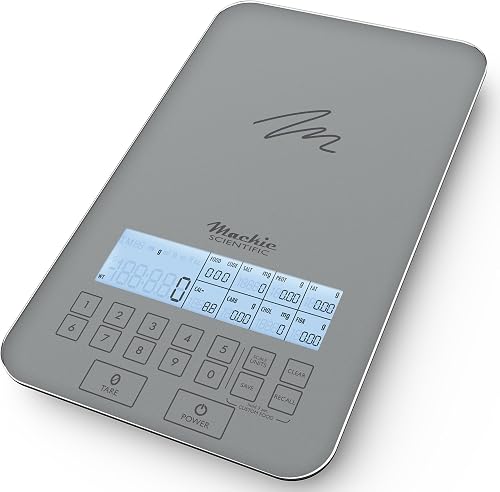
The NutraTrack Food Scale is a straightforward, offline device with a very large, bright display. It tracks a wide range of macros, including sodium and cholesterol, for 999 foods. It’s a good choice for those who want to track macros privately without an app. The tempered glass surface is easy to wipe clean.
One drawback is that the manual entry system is less convenient than app-based scanning. If you’re looking for a lifetime policy, this brand offers a free repair or replacement program. Always consult a healthcare provider before starting any new nutrition tracking program, especially if you have a health condition.
9. Smart Nutrition Food Scale

This scale by WARMKEY focuses on ease of use for keto and weight-loss followers. It syncs with a mobile app to log food history and monitor progress. The 1g precision is standard for most daily meal prep needs. It’s compact and designed for a minimalist kitchen.
10. Escali Primo Scale

The Escali Primo is a reliable, no-frills standard scale for basic weighing. Its simple two-button operation makes it very user-friendly for people who don’t want smart features. It has a high 11-pound capacity and a durable, sealed control panel.
The main drawback is that it lacks any nutrition-tracking or app-based features. It’s strictly for weighing, not for calculating macros or calories. If you’re a baker, the 1g increments provide sufficient accuracy for most standard recipes. If you need to track specific nutritional data for a health condition, you’ll need to do the calculations manually. Talk to a doctor before making changes to your diet based on your own tracking.
Safety, Care, and Maintenance Tips
Most digital scales are safe, but they aren’t medical devices meant for treating illnesses. Don’t rely on them to manage chronic conditions without professional oversight. Always follow the manufacturer’s specific instructions for calibration and cleaning to ensure consistent accuracy. If you notice strange readings or persistent sensor errors, stop using the device and consult your manual.
Never exceed the weight capacity of your scale. For example, while some models support up to 22 pounds, others are limited to 11 pounds. Exceeding these limits can permanently damage the internal sensors, rendering your measurements unreliable.
The accuracy of your tracking depends on proper use. If you’re using a scale to manage health goals, remember that individual nutritional needs vary greatly. Use these tools to support your habits, but prioritize guidance from your healthcare provider over automated app data. If your scale requires a calibration weight, use it regularly to confirm that your readings remain precise.
Related guides
FAQ
Is it safe to use these scales if I am on medication?
Always speak with your doctor or pharmacist before making diet changes, as tracking intake can influence how certain medicines affect your body. They can tell you if your specific health goals are safe to monitor at home.
Do these scales guarantee weight loss?
No scale can guarantee results, as weight management depends on many factors like activity level, sleep, and overall health. These devices are simply tools to help you gather information about your food portions and macro intake.
What should I look for on the label when buying a scale?
Look for a capacity that fits your cooking needs and a precision level that matches your goals, such as 1g for standard meals or 0.1g for baking. Check if the scale requires an app, as the product listings note the availability of offline, code-based systems.
How do I know if the nutrition data is accurate?
Most smart scales use large, public databases to estimate nutrient content, which may differ slightly from the exact labels on your specific food items. For the most accurate tracking, always compare the scale’s data to the nutrition label on your food packaging.
Can I use these scales to track medication?
No, these scales are intended for food and nutrition tracking only and aren’t calibrated for weighing medicine. Use appropriate medical measuring devices for any medication or supplement dosing to ensure safety.
Conclusion
Choosing the right scale depends on whether you prefer app-based automation or simple, offline tracking. Identify which features—like barcode scanning or dual platforms—best match your daily routine.