
As an Amazon Associate, we earn from qualifying purchases. This post contains affiliate links – if you buy through them, we may earn a commission at no extra cost to you.
Finding the right light for your bedroom can be a challenge when you want to keep your space dark but need a little help navigating at night. Standard white lights are often too bright or harsh, which can make it hard to fall back asleep after a trip to the bathroom. Red light is often preferred because it’s less likely to disrupt your natural sleep-wake cycle compared to blue or white light.
This guide covers a variety of options, from plug-in models with sensors to portable, rechargeable lamps. We chose these products by looking at their features, light modes, energy efficiency, and overall design.
When choosing, consider how you intend to use the light. If you need constant orientation, look for models with a dusk-to-dawn sensor that stays on at night. If you only need light when you move, pick a motion-sensor model. These typically detect movement within a 120-degree angle and up to 13 feet away.
A common mistake is plugging two lights too close together. If you place them within one meter of each other, the sensors may cause interference. Always check your outlet configuration; many modern, slim designs are built to leave the second wall outlet free.
If you’re unsure which type you need, follow this rule: choose a plug-in model for permanent fixtures like hallways or bathrooms, and a rechargeable, portable lamp for nursing, reading, or travel. While most plug-in options use as little as 0.3W to 1W, rechargeable versions offer flexibility where outlets are unavailable. This information is for educational purposes only and isn’t medical advice. Always talk to a doctor if you have concerns about your sleep.
Quick Picks
QUICK ANSWER · OUR TOP PICKS AT A GLANCE
Best overall: LOHAS Dimmable Red Nightlight. It offers reliable brightness control up to 80lm and a smart sensor. Keep two lights at least 1m apart to avoid interference.
Best for sleep therapy: 670nm Red Night Light. This uses a 670nm wavelength to support melatonin production. Plug it in an area exposed to natural daylight for the sensor to work correctly.
Most adjustable: Red LED Backlit Nightlight. It features stepless dimming and a memory function that saves your last setting. Its diffuse design prevents direct glare, making it ideal for light-sensitive users.
Best motion sensing: Red Motion Sensor Nightlight. This model detects movement up to 13ft at a 120° angle. Use the switch to toggle between constant glow or motion-activated modes.
Best remote controlled: 670nm Red Sleep Lamp. This rechargeable unit includes a remote and four sleep timers. It’s the best choice if you need portable, battery-powered light for travel or bedside use.
Comparison Table
How We Picked
Our ranking focuses on design features like sensor reliability, dimming capabilities, and power efficiency.
Products with foldable plugs or slim profiles were prioritized for travel and space-saving needs. We also examined power consumption, noting that efficient models use as little as 0.3W to 1W.
Product rankings are based on these stated features; commission structures don’t influence our selection process. If you require a specific sleep-aid protocol, choose models with adjustable timers or memory functions to ensure your settings remain consistent each night.
Product Reviews
1. LOHAS Dimmable Red Nightlight

2. 670nm Red Night Light

This 3-pack is built for those looking for a specific 670nm wavelength, which the manufacturer states is designed to support melatonin production. It features a smart dusk-to-dawn sensor and a foldable plug, which is helpful if you travel and need to save space. The brightness is adjustable via a button on the front, allowing for different levels of visibility. One drawback is that it requires an outlet exposed to natural daylight to trigger the sensor correctly. Additionally, the fixed design means you can’t adjust the angle of the light. Individuals taking prescription medications or those with specific medical conditions should talk to a professional before using light therapy products.
3. Red LED Backlit Nightlight
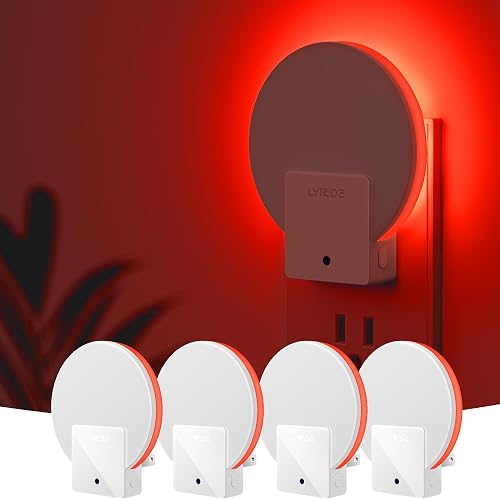
The Lyridz model uses a backlit design, which reflects light off the wall to avoid direct glare. This is a great choice for light-sensitive people or those prone to insomnia. It offers both a 5-level preset dimming mode and a stepless dimming option from 1 to 50 lm. The light also remembers your last setting, so you don’t have to adjust it every night. One drawback is the physical size; while compact, it may still block parts of a standard wall plate depending on your setup. Also, the 4-pack may be more than what some users need for a single room. Please speak with a doctor if you have persistent sleep issues before starting any new routine.
4. Red Motion Sensor Nightlight

This YUNLEX model is unique because it offers three lighting modes: backlit, frontlight, or both. It features a motion sensor that detects movement up to 13 feet away at a 120-degree angle. You can choose to keep it glowing constantly or set it to motion-only mode. A drawback is that the motion sensor sensitivity is fixed, which might not suit every room layout. Furthermore, the 10-lumen maximum brightness is lower than some other options, which might be too dim for those wanting to use it for reading. Consult your doctor if you’re managing health conditions, as they can provide the best guidance for your specific sleep needs.
5. Red Dusk to Dawn Nightlight

The Sujeet 4-pack is an efficient, basic option for those who want a simple dusk-to-dawn light for hallways or bathrooms. It consumes only 0.5 watts and is designed to leave the second outlet in a duplex wall plate free. This is a practical choice for lighting up multiple areas of the home at once. A drawback is that it lacks brightness adjustment, meaning you’re stuck with the factory setting. Additionally, there’s no motion sensor, so it stays on as long as the room is dark. If you have concerns about nighttime safety or sleep disruptions, it’s always a good idea to discuss these with your healthcare provider first.
6. 670nm Red Sleep Lamp

This rechargeable lamp is perfect for people who want to avoid wall outlets entirely. It comes with a remote control and touch-sensitive buttons, allowing you to dim the light from 10% to 100%. It also includes multiple timer settings, which is useful for those who want the light to turn off automatically after they fall asleep. One drawback is that the internal 2000mAh battery requires periodic charging via USB-C. Also, the remote control is small and could be easily misplaced. As with other sleep-related products, pregnant women or those on medication should check with their doctor to ensure this tool aligns with their health plan.
7. Magnetic Red Motion Light

This portable set by Bestendony features a magnetic base, allowing you to stick it to metal surfaces or use the included adhesive plates. It includes a motion sensor that turns the light off 30 seconds after movement stops, helping to save battery life. It’s rechargeable, so you don’t need to buy disposable batteries. One drawback is the 5-hour battery life when in “ON” mode, which is relatively short compared to plug-in models. Another issue is that the adhesive might not stick well to all wall textures. Always consult a medical professional if you’re taking medications that might be affected by changes in your sleep environment.
8. Neporal Red Sleep Bulb

This is an A19 bulb that fits into standard lamps, making it a great alternative to plug-in night lights. It uses 9W to produce 800 lumens, which is much brighter than the other small night lights on this list. It’s ideal for bedside reading lamps where you need more light but still want to block blue light. A drawback is that it’s a full-sized bulb, so it won’t work in small night light fixtures. It also lacks a built-in sensor, so you must turn it on and off manually. If you’re pregnant or have a medical condition, speak to a doctor before changing your bedroom lighting.
9. Red LED Guide Light

The myCozyLite model features a dual-mode design that lets you switch between a soft backlight or a brighter main light. It includes an on/off switch and a dusk-to-dawn sensor for automatic operation. The compact size is intended to leave the second outlet accessible. One drawback is that the button controls can be slightly fiddly if you have limited dexterity. Another point is that the “smart” mode might be too sensitive for some lighting environments, causing it to turn on when you don’t want it to. Please consult a doctor for advice if you’re managing any health conditions that affect your sleep.
10. JandCase Red Night Light

This is a straightforward plug-in night light for basic needs. It features a simple light sensor that turns the unit on when the room is dark and off when it’s bright. It’s very compact and uses only 0.3 watts of electricity. A drawback is that it has no dimming features, so the 40-lumen output is fixed. Also, it doesn’t have a motion sensor, meaning it stays on all night. If you have any medical concerns or are taking medications that might impact your sleep quality, you should talk to your doctor before using this product.
Safety, Care, and Maintenance Tips
Using these night lights is generally safe, but there are practical considerations for your home environment. To prevent potential interference, keep a wide enough gap between two plug-in lights to ensure they do not affect each other. If you’re using models with rechargeable batteries, ensure you charge them only as directed to maintain the integrity of the power cell.
Related guides
FAQ
Does red light really help with sleep?
Research suggests that red light is less likely to suppress melatonin production than blue or white light, which may help maintain your natural sleep cycle. However, the evidence isn’t a guarantee that it will solve your sleep problems, and individual results will vary.
What should I look for on the label when buying a night light?
Look for the light’s power consumption, the type of sensor it uses, and whether it offers dimming or motion detection features. Ensure the dimensions of the plug-in unit are compatible with your wall outlets so it doesn’t block other devices.
How do I know if a light is truly red or just a coating?
Check the product description for terms like “pure red LED” or a specific wavelength, such as 670nm or 625nm. Products that simply use a red plastic shell over a white bulb may not offer the same spectrum benefits as those using dedicated red light-emitting diodes.
Can I use these lights in a room with a baby?
Many of these lights are marketed for nurseries, but you should always consider the brightness level and placement. It’s best to place the light far enough from the crib to avoid direct glare, and you should speak with your pediatrician if you have specific concerns about your baby’s sleep environment.
Conclusion
Choosing the right red light depends on whether you need a permanent plug-in solution or a portable lamp. Look for features like adjustable brightness and sensors that match your room’s layout. Start by checking your wall outlet space and deciding if you need a motion sensor or a steady glow. Consult a professional before starting any new health regimen.