Medical note: This article is for education only and is not medical advice. Talk to a doctor or pharmacist before starting a supplement or changing any treatment, especially if you are pregnant, breastfeeding, take prescription medicines or have a health condition. Individual results vary.
As an Amazon Associate, we earn from qualifying purchases. This post contains affiliate links – if you buy through them, we may earn a commission at no extra cost to you.
This guide cuts through the noise to help you find the right approach for your specific needs. By focusing on proven methods rather than random advice, you can avoid the mistake of choosing a generic plan that doesn’t address the root cause of your specific sleep disruption.
What Buyers Get Wrong
Choosing the wrong sleep methodology
When you look for how to stop nighttime sleep mistakes that destroy heart health, you often encounter broad, generic advice that fails to address your unique situation. Many people pick a book based on a catchy title rather than a specific, actionable strategy that fits their lifestyle. If you suffer from anxiety, a general tips book won’t help you as much as a focused guide on calming the nervous system. Always look for the specific methodology promised, such as cognitive behavioral strategies or habit correction, to ensure the content matches your actual struggles.
Overestimating the value of quick fixes
It’s easy to fall for the promise of instant results, but sleep improvement is rarely a rapid process. Buyers often return books within a week because they expected a single hack to solve years of poor sleep habits. The reality is that resetting your internal clock requires consistency and a methodical approach. Don’t expect one tip to change your biology overnight. Instead, seek resources that provide a structured plan over several days or weeks, as these are more likely to yield lasting improvements.
Ignoring the emotional side of insomnia
Many readers focus only on the mechanics of sleep, such as room temperature or timing, while ignoring the emotional triggers of their wakefulness. If your mind is racing with thoughts, a list of physical hacks won’t shut down your overthinking. You need a guide that specifically targets the psychological aspects of sleep, like stress management and cognitive regulation. Neglecting this part of the equation is a common mistake that leaves many people frustrated, as they treat the symptoms of their insomnia without addressing the underlying emotional exhaustion.
Overlooking the importance of habit tracking
Without a clear way to track your progress, it’s difficult to know if a specific method is working. Many buyers purchase a book and try to apply all the advice at once, which makes it impossible to tell what actually helps. A better approach is to use a guide that encourages small, incremental changes paired with self-reflection. If you don’t monitor your habits, you’ll likely revert to old patterns.
What Did Not Make the List
While building this shortlist, I set aside many listings that lacked clear, actionable strategies. Some books were too vague, offering only surface-level tips without a framework to apply them. Others were near-duplicates, repeating the same general advice found in better-rated, more specific guides. I also excluded listings that lacked sufficient detail from the seller, as it’s difficult to determine if a book provides scientific backing or just personal opinion. My focus remained on selecting titles that offer distinct, specialized approaches to common sleep problems. By filtering out these less effective options, this guide ensures you spend your time on resources that provide clear paths to better rest.
1. Why You Wake at 3

Avoids the trap of: Choosing the wrong sleep methodology by focusing on science.
This book explains the scientific and psychological reasons for sleep interruptions. It is designed for readers who want to understand the causes of their broken sleep to manage it better. It suits those who prefer using logic and science to change their habits.
However, if you prefer a quick, list-based approach without deep explanations, this might feel too dense. The scientific focus is designed to help you regain control, but it requires active engagement with the concepts provided.
Pros:
- Focuses on the science of deep sleep.
- Addresses the psychology of broken cycles.
- Provides clear steps for falling back asleep.
Cons:
- Might be too detailed for casual readers.
- No mention of specific, rapid-fire hacks.
2. 3AM Wake-Up Fix

Avoids the trap of: Overestimating the value of quick fixes by using a reset.
This resource provides a structured reset method designed to calm your nervous system. By focusing on the reduction of nighttime anxiety, it aims to help you sleep through the night consistently. It’s a good fit for someone who feels their nervous system is constantly on high alert at night.
If you’re looking for general sleep hygiene tips rather than a specific reset protocol, this might be more intense than you need. It assumes you’re ready to commit to a defined process to change your current sleep state.
Pros:
- Targets the nervous system directly.
- Specifically addresses nighttime anxiety.
- Aimed at fixing broken sleep patterns.
Cons:
- Requires commitment to a reset protocol.
- Not a collection of general tips.
3. How to Sleep Better

Avoids the trap of: Ignoring the emotional side of insomnia.
This guide takes a direct, emotional approach to help you calm your mind and stop overthinking. It promises to help you restore deep sleep over a 14-day period, making it a structured journey. It suits those who feel their primary sleep barrier is an emotional, racing mind.
If you struggle with physical symptoms like restless legs or temperature regulation, this book isn’t for you. It ignores biological hacks to focus entirely on the psychology of rest. You should choose this guide only if your insomnia is rooted in mental loops rather than physical discomfort.
The book is written in Spanish, which is a major factor for non-native speakers to consider. If you aren’t fluent, you’ll miss the nuance required to follow the 14-day recovery plan.
Pros:
- Focuses on emotional regulation.
- Structured 14-day recovery plan.
- Addresses nighttime overthinking patterns.
Cons:
- Language barrier for some readers.
- Focuses on emotion over physical hacks.
4. Stop Overthinking at Night

This book provides specific techniques to calm anxiety and quiet the mind without the use of medication. It’s designed for busy people who find it hard to switch off their brains after a long day. It suits those who are tired of letting stress dictate their sleep quality.
If you’re looking for physical sleep remedies like herbal teas or supplements, this book won’t meet those needs. It remains strictly within the realm of psychological and cognitive management.
Pros:
- Specifically targets nighttime anxiety.
- Offers techniques to quiet the mind.
- Designed for busy, stressed individuals.
Cons:
- No focus on physical sleep aids.
- Requires cognitive effort to apply.
5. How To Fall Asleep

Avoids the trap of: Overlooking the importance of habit tracking.
This book tackles the modern issue of bedtime procrastination and screen usage. It helps you reclaim your time by correcting the habits that keep you awake when you should be resting. It suits the reader who knows their phone usage is the main reason for their poor sleep.
If your sleep issues are caused by stress or medical concerns, changing your screen habits alone might not be enough. This book is for those whose primary obstacle is behavioral discipline.
Pros:
- Addresses digital distractions effectively.
- Helps overcome bedtime procrastination.
- Focuses on reclaiming personal time.
Cons:
- Limited to behavioral habit correction.
- Doesn’t address deeper physiological issues.
6. Trouble Sleeping

Avoids the trap of: Choosing the wrong sleep methodology by using natural remedies.
This guide provides a collection of natural sleep remedies to help you get better rest. It’s a practical resource for those who prefer to avoid medication and seek more holistic methods. It suits the reader who wants to explore natural, non-invasive ways to improve their sleep quality.
The listing doesn’t specify which natural remedies are included, so it may not be for those who want a strictly scientific or medical approach. It’s intended for someone open to exploring various natural options.
Pros:
- Focuses on natural sleep remedies.
- Offers effective ways to improve sleep.
- Avoids the use of synthetic medication.
Cons:
- Specific remedies aren’t listed.
- Lacks a single, unified methodology.
7. Sleeping Hacks

Avoids the trap of: Overestimating the value of quick fixes.
This book provides over 20 different methods to help you sleep better at night. It’s perfect for those who like to experiment with different tips to see what works best for them. It suits the reader who prefers a variety of options over a single, long-term program.
Because it offers so many different hacks, you might struggle to implement them all at once. It isn’t designed for someone looking for a deep, psychological dive into why they can’t sleep.
Pros:
- Offers a wide variety of methods.
- Easy to implement individual hacks.
- Good for testing different approaches.
Cons:
- Lacks a cohesive, singular strategy.
- Might lead to trying too much.
8. How to Sleep Better

This book serves as a straightforward manual of tips and tricks designed to help you fall asleep and stay asleep. It acts as an accessible entry point for those just beginning their journey toward improved rest. You should choose this guide if you prefer basic, actionable advice over complex sleep theory.
However, avoid this book if you have already exhausted standard sleep advice and still struggle to maintain rest throughout the night. It focuses on foundational habits rather than advanced clinical interventions.
If you are looking for a structured, long-term plan to overhaul your circadian rhythm, the advice here will likely fall short of your needs. The content remains focused on immediate, simple adjustments.
Pros:
- Offers simple, accessible tips.
- Addresses both falling and staying asleep.
- Avoids complex jargon or dense theory.
Cons:
- The advice may feel like common knowledge to experienced readers.
- It lacks a structured, long-term plan for chronic issues.
9. The Sleep Reset
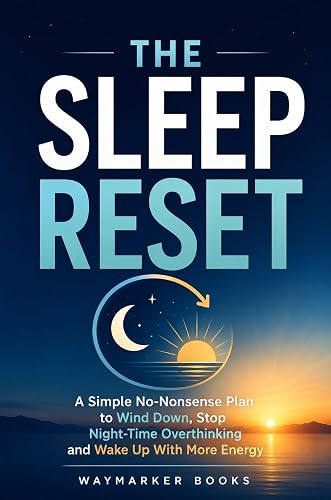
This book provides a no-nonsense plan to help you wind down and wake up with more energy. It uses cognitive behavioral strategies to stop night-time overthinking. It suits the reader who wants a clear, step-by-step plan that cuts through the fluff.
The focus remains strictly on mental strategy. This means it isn’t for those looking for physical gadgets or environmental hacks. If you prefer changing your bedroom lighting or buying white noise machines, these methods will disappoint you. It requires a willingness to engage in cognitive work to see results.
The decision rule is simple: if you want a structured mental framework to quiet your mind, follow this plan. If you’re seeking a quick fix through external tools, look elsewhere.
Pros:
- Clear, no-nonsense approach.
- Uses cognitive behavioral strategies.
- Focuses on increasing daily energy.
Cons:
- Requires active mental engagement.
- Limited focus on physical environment.
10. 101 Brain Hacks
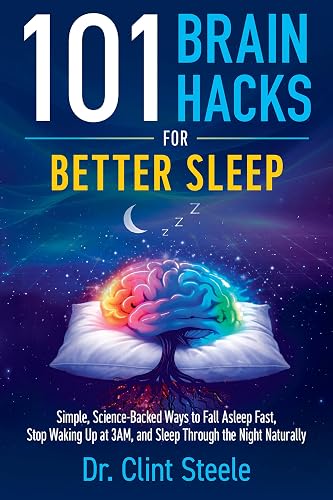
This book provides 101 science-backed ways to fall asleep fast and stop waking up at 3 AM. It’s a comprehensive resource for those who want a large library of techniques at their fingertips. It suits the reader who loves having many options to address specific, small sleep problems.
With so many hacks, it isn’t for someone who gets overwhelmed by too much information. You must be prepared to pick and choose the ones that work for you. If you prefer a single, linear recovery plan, this book will likely frustrate you. It functions best as a reference guide rather than a step-by-step manual. Use it to troubleshoot one specific issue at a time, such as your midnight wake-ups, rather than trying to overhaul your entire sleep hygiene at once.
Pros:
- Massive library of 101 hacks.
- Science-backed techniques.
- Directly addresses 3 AM wake-ups.
Cons:
- Potential for information overload.
- No single, unified recovery plan.
Before You Order
Measure the time you spend on screens before bed to identify your primary habit trap. If you find yourself binge-watching or scrolling social media instead of resting, you need a guide focused on reclaiming your schedule.
Check your room environment for light or noise sources that disrupt your rest. If your primary issue is physical, look for natural remedies or simple hacks.
Confirm that you’re ready to commit to a structured plan rather than just looking for a single quick fix. Lasting change requires a reset of your nervous system.
Identify your main sleep hurdle—such as anxiety, overthinking, or 3 a.m. wake-ups—to choose the most relevant guide. If you struggle with racing thoughts, prioritize books that offer specific techniques to quiet your mind without medication.
Related guides
- Key Muscle-Health Metabolic Markers
- Aging, Muscle Mass, and Metabolic Health
- Myokines: Muscle Signals in Metabolic Health
Frequently Asked Questions
Is the simplest one on this list enough?
A simple guide is often enough to establish foundational habits and improve sleep quality. Sleep issues frequently stem from routine errors rather than complex biological problems. Consistency with basic rules is usually the most effective solution for immediate results.
What if it turns out to be the wrong one?
If a book doesn’t resonate with you, it’s simply a sign that you need to shift your focus to a different aspect of your sleep hygiene. Sleep is highly individual, and what works for one person might not help another. If you find that a book on emotional regulation doesn’t help, you might actually need a book on habit correction instead.
What gives out or runs out first?
Your motivation is the resource most likely to run out when you don’t see immediate results. Sleep improvement takes time, so focus on small, daily wins to maintain progress. Keeping a sleep log can help you stay consistent even when changes feel slow.
Which trap catches most people twice?
The most common trap is searching for a single “magic bullet” to solve your sleep issues. Many people cycle through quick fixes without addressing underlying habits. You can avoid this by sticking to one structured plan for at least two weeks.
Closing
A common mistake is choosing a generic sleep guide that fails to address the unique cause of your nighttime wakefulness. You must distinguish between a need to calm an overactive mind, a requirement to fix physical habits like scrolling, or a deeper struggle with anxiety.
If your mind races, select a guide focused on stopping nighttime overthinking. If you suffer from bedtime procrastination or binge-watching, choose a resource dedicated to reclaiming your schedule. By selecting a book that matches your specific struggle, you stop the patterns that negatively impact your sleep.
Start by assessing your own nightly routine tonight. Once you identify your main barrier, pick the guide from this list that directly targets that issue. A focused, consistent approach is the most reliable way to restore deep, restorative sleep. Don’t settle for general advice when your specific sleep disruption requires a targeted reset.