
As an Amazon Associate I earn from qualifying purchases. VitalEdgeTribe provides general educational product comparisons only and is not medical advice; consult a licensed healthcare professional before starting any new wellness device, exercise tool, or supplement.
Finding the right water filter can feel like a chore, especially when you want clean water without the hassle of permanent plumbing. Countertop reverse osmosis (RO) systems offer a solution by pushing water through a 0.0001-micron membrane to remove up to 99.9% of contaminants like lead, PFAS, and fluoride.
This guide evaluates popular models based on their listed features, materials, and independent certifications, such as those from SGS or IAPMO. We prioritize systems that balance pure-to-drain ratios, filter longevity, and ease of use. While some units offer instant hot water or mineral remineralization, others focus on portability for renters or travelers.
If you live in a small apartment or frequently move, prioritize “plug-and-play” models that require no drilling. If you’re concerned about secondary pollution, look for systems featuring borosilicate glass carafes instead of plastic. Note that these systems are designed for municipally treated tap water; if your source is cloudy or contaminated, you may need a different solution.
This isn’t a list of products we have used ourselves. We rely on manufacturer specifications and third-party test data to help you decide. This information is for education only and isn’t medical advice. Always talk to a doctor or pharmacist before making changes to your health routine. Because filter life varies by usage and water quality, always monitor your device’s display for real-time alerts.
Quick Picks
QUICK ANSWER · OUR TOP PICKS AT A GLANCE
Best overall: Dreo Countertop RO System. This 7-in-1 system filters 99.9% of contaminants like PFOA and chlorine. It’s tested to NSF/ANSI 58 standards and maintains a 3:1 pure-to-drain ratio.
Best glass carafe design: Bluevua RO100ROPOT. Unlike plastic-heavy models, this uses a high borosilicate glass carafe to prevent secondary pollution. It includes a remineralization filter and enters a power-saving mode when idle.
Most advanced filtration: SimPure Y7P-BW. This unit combines a 4-stage 0.0001μm RO membrane with UV purification. It achieves a 4:1 pure-to-drain ratio, the highest efficiency available, and dispenses water in about 15 seconds.
Best instant hot water: Waterdrop K19-H. If you need immediate heat, this system dispenses hot water in 3 seconds without limescale buildup. It features a 170 oz tank and a child lock for safety.
Best for portability: Bluevua ROPOT-Travel. At 10x5x13.5 inches with a stainless steel handle, it features a compact and portable design. It uses a 6-stage filtration process and includes a glass bottle for on-the-go use.
Comparison Table
Choosing the right system depends on your specific water needs. If you require hot water for tea or coffee, prioritize models like the Waterdrop K19-H or Sans, which offer instant heating. Note that the SimPure Y7P-BW is strictly for room-temperature water.
Space and portability are critical for renters or travelers. The Bluevua ROPOT-Travel and Philips models are designed for small footprints. When comparing efficiency, look at the pure-to-drain ratio. The SimPure Y7P-BW leads with a 4:1 ratio, while most others, including the Dreo and Waterdrop C2SL, offer a 3:1 ratio.
How We Picked the Best Countertop Reverse Osmosis Water Filters
To choose these products, we analyzed manufacturer specifications, prioritizing systems with independent testing or certifications like NSF/ANSI 58. We focused on units that require no plumbing or drilling, making them ideal for renters or small spaces.
When evaluating these systems, we looked for a high pure-to-drain ratio to ensure water efficiency. For example, some models offer highly efficient filtration that significantly reduces wastewater compared to traditional systems. We also prioritized designs with clear maintenance indicators, such as filter life monitors or voice alerts, to ensure the user knows exactly when to replace cartridges.
We favored models that use high-quality materials like borosilicate glass for carafes to avoid secondary pollution. Finally, we assessed the speed of filtration and the inclusion of extra features like instant heating or UV-C purification. Our rankings are based entirely on these public performance details, and commissions don’t influence our selections.
Product Reviews
1. Dreo Countertop RO System

2. AquaTru Classic Purifier

The AquaTru Classic Purifier is built for those who prefer glass over plastic. It uses a 4-stage system certified by IAPMO to reduce 84 different contaminants, including lead and forever chemicals. It’s a good pick for renters because it needs no plumbing or permanent installation. Also, the filters require replacement every 6 months to 2 years. If you have a specific health condition or take regular medications, consult your doctor first to ensure this system is right for your needs.
3. Bluevua RO100ROPOT System

This system stands out for its 5-stage filtration that includes a remineralization filter. This helps balance the taste of the water after the reverse osmosis process. The use of a high borosilicate glass carafe is a nice touch to avoid plastic contact. It also features a power-saving mode when not in use. You must also monitor the filter life display to know when to swap out the tubes. Please talk to a doctor before use if you’re pregnant, nursing, or on any medications.
4. SimPure Y7P-BW Filter

If you want an extra layer of protection, this model includes a UV sterilization stage alongside its comprehensive multi-level RO filter. This helps purify the water without adding chemicals. It’s very versatile and can be placed anywhere with a power plug, such as an office or an RV. One limitation is that it only dispenses water at room temperature. It also requires the water source to have a TDS [total dissolved solids] level below 500 ppm. Anyone with health concerns or those taking prescription drugs should check with their doctor before relying on this water system.
5. Waterdrop K19-H Dispenser

6. Waterdrop C2SL Filter

The Waterdrop C2SL is designed for small kitchens where space is limited. It uses a 7-stage filtration system and adds minerals back into the water for a balanced taste. The auto-fill glass pitcher is convenient for storage in the fridge. It also relies on voice alerts for status updates, which might not suit everyone. As with other systems, people on prescription medication or with health conditions should consult a doctor first.
7. Philips Countertop RO

This system uses Aquaporin technology, which mimics natural water filtration processes to reduce impurities. It’s very compact, making it a good fit for dorms or small offices. It’s certified to NSF/ANSI 58 and 372 standards for safety. A limitation is the flow rate, which is about 9 oz per minute, so it’s slower than a standard tap. You must also perform a monthly flush to prevent scale buildup. If you have health concerns or are on medication, please speak with a medical professional before starting.
8. Ninja HydraSense System

The Ninja HydraSense offers intelligent monitoring that tracks your water usage in real-time. It claims to remove 80+ contaminants and uses a one-touch dispensing system for ease of use. You can even add ice to the reservoir for cold water. One drawback is the larger size, which might be too big for some counters. It also requires two filter replacements per year. If you’re pregnant, nursing, or have a medical condition, you should talk to a doctor before using this or any other home filtration system.
9. Sans Countertop RO

10. Bluevua RO100ROPOT-Travel
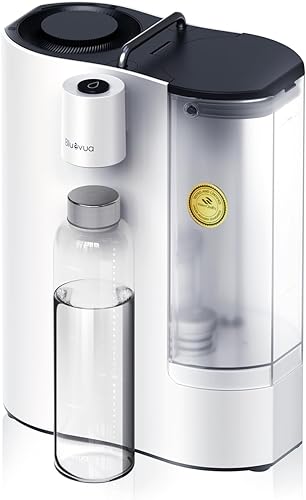
This is the most portable option in the group, featuring a stainless steel handle for easy carrying. It uses 6-stage filtration with a UV light to ensure water quality on the go. It’s perfect for travelers or those living in dorms. The system is designed to dispense 18 oz of water at a time into an included glass bottle. A drawback is the smaller capacity compared to home-only units, which means more frequent refilling. Anyone on prescription medication or with a health condition should consult a doctor before use.
Safety, Care, and Maintenance Tips
Reverse osmosis systems are generally safe, but they remove essential minerals alongside contaminants. Because some models add minerals back while others do not, the mineral content of your water can vary significantly between brands. If you have kidney disease, thyroid issues, or are on a restricted diet, you must consult your doctor or pharmacist before use. Pregnant or breastfeeding individuals should also seek medical advice before changing their primary water source.
Always follow the manufacturer’s specific instructions for filter replacement. Using a system past its filter life can lead to poor water quality, as the membrane may no longer effectively block impurities. Never exceed the usage limits set by the maker, as these thresholds are designed to ensure consistent purification performance. If your system features a real-time water quality monitor, use it to track performance; a sudden drop in quality is a clear sign that a filter change is overdue. If you’re uncertain about your specific health needs or the mineral profile of your filtered water, speak with a professional before integrating these systems into your daily routine.
Related guides
- Warm Water Foot Soak to Dilate Peripheral Arteries
- How to Use Lemon Balm Water 10 Best Products for Stress
FAQ
Is it safe to use these systems with my current prescription medications?
You should always ask your doctor or pharmacist if your specific medication interacts with filtered water or the mineral content of your water. They can provide advice based on your medical history and the type of treatment you’re receiving.
Does reverse osmosis filtration really work to clean my water?
Reverse osmosis is a well-studied National Sanitation Foundation standards method for reducing contaminants like heavy metals and dissolved solids. The effectiveness depends on the quality of the membrane and regular maintenance of the filters.
What should I look for on the label when buying a filter?
Look for certifications from independent bodies like NSF or IAPMO, which confirm the product meets specific safety standards. Also, check the filter life expectancy and whether the system requires a power source for your space.
Do I need to worry about water waste with these machines?
Most countertop RO systems have a “pure to drain” ratio, meaning some water is used to flush the system. If water usage is a concern for you, check the product specifications for the ratio of filtered water produced versus water sent to the drain.
How often do I need to change the filters?
Filter life varies by model, usually ranging from 6 to 24 months depending on your local water quality and how much you use the system. Most modern units have a display or alert to notify you when it’s time to replace them.
Conclusion
Choosing a countertop RO system depends on your counter space and your specific needs, such as hot water or portability. Check for independent certifications and consider the maintenance requirements for future filter replacements. This article is for education only and isn’t medical advice.