
As an Amazon Associate, we earn from qualifying purchases. This post contains affiliate links – if you buy through them, we may earn a commission at no extra cost to you.
Finding the right cookware for a non-toxic kitchen often leads cooks back to the basics. The 10 Best Cast Iron Skillets for Non Toxic Cooking represent a shift toward durable, long-lasting tools that don’t rely on synthetic coatings. These pans offer a natural way to sear, bake, and fry without concerns about chemicals like PFOA or PTFE leaching into your food.
This guide covers a variety of options, from traditional heavy-duty pans to modern, lighter designs. We selected these products by reviewing manufacturer specifications, material compositions, and design features such as handles and surface finishes.
If you’re choosing between models, look for the handle design that fits your storage and maneuverability needs. Some pans feature extended, stay-cool handles for stovetop control, while others offer dual-loop handles for easier oven transfers. Remember that while cast iron is naturally non-stick, it requires regular oiling to maintain its finish. If you encounter a spot that looks like rust, it’s often just uncarbonized oil that will disappear with use. This information is based on public product data and manufacturer listings compared on their own listed specs. This article is for education only and isn’t medical advice.
Quick Picks
QUICK ANSWER · OUR TOP PICKS AT A GLANCE
Best overall: Lodge Pre-Seasoned Skillet. This is a reliable, classic choice that’s widely available and built for high-heat cooking.
Best for beginners: Lodge Dual Handle Pan. The two-handle design provides extra stability and makes moving the pan easier, especially for those new to the weight of iron.
Best for smooth surfaces: Stargazer Cast Iron Skillet. It features a machined finish that feels significantly smoother than standard cast iron, minimizing food sticking.
Best lightweight design: Lodge Blacklock Skillet. It offers a design weighing 25% less than traditional cast iron, making it ideal if you find standard pans difficult to maneuver.
Best for versatility: Greater Goods 10″ Skillet. Its precision-milled surface provides a nonstick-like release without synthetic coatings, making it a strong contender for those transitioning from modern nonstick pans.
If you notice rust upon arrival, don’t assume the pan is broken; simply scour the area and re-oil.
Comparison Table
When choosing between these options, consider the weight and surface texture. Traditional cast iron, like the standard Lodge skillet, is heavy and features a slightly textured surface. If you prefer a lighter pan, look for the Blacklock or Lancaster models, which are engineered to weigh significantly less while maintaining heat retention.
If you prioritize a nonstick experience from the first use, choose a precision-milled or machined surface like those found on Stargazer or Greater Goods pans. These are smoother than standard cast iron.
For those who cook sauces frequently, prioritize pans with pour spouts, such as the Victoria or Lancaster. If your primary goal is searing or roasting, the standard Lodge or Utopia pans provide the mass necessary for consistent, steady heat. If you see rust upon arrival, remember that it’s often just uncarbonized oil; simply scour it away and re-season to restore the surface.
How We Picked the Best Non-Toxic Cast Iron Skillets
We prioritized products that clearly list their materials, focusing on pure iron and natural seasoning oils. Picks were based on manufacturer-stated features, such as surface finish, handle design, and compatibility with various heat sources. We looked for transparency regarding manufacturing locations and specific design goals, such as weight reduction or improved ergonomics.
Our rankings rely on these specifications rather than affiliate commissions. We didn’t perform hands-on testing; all data comes exclusively from comparing product listings and company documentation on their own listed specs. When evaluating these pans, consider your primary use case. If you prioritize maneuverability, seek out models marketed as lightweight, such as those weighing 25% less than traditional iron. If you require a versatile kitchen workhorse, look for pans featuring both a primary handle and a helper handle for balance. Always verify the seasoning oil used, as some manufacturers specify flaxseed oil while others use vegetable oil.
Product Reviews
1. Lodge Pre-Seasoned Skillet

This skillet is a standard choice for home cooks looking for a reliable, multi-purpose tool. It’s well-suited for those who want a pan that can handle everything from campfire cooking to daily stove use. The pan is known for its heat retention and durability. It comes pre-seasoned with vegetable oil, which helps create a non-stick finish. The teardrop handle is designed for grip, though some users may find the pan quite heavy compared to modern thin-walled alternatives. It’s compatible with most stovetops and ovens. You should check that the weight of the pan fits your needs, as traditional cast iron can be taxing to lift. Drawbacks include the rougher surface texture compared to machined pans and the need to maintain seasoning to prevent rust.
2. Stargazer Cast Iron Skillet

The Stargazer skillet is built for those who prioritize a smooth cooking surface. It’s machined to reduce food sticking, making it easier to cook delicate items like eggs. The design is modern, featuring a stay-cool handle and a flared rim that makes pouring liquids simple. It’s lighter than many traditional cast iron pans, which adds to its ease of use. The brand offers a lifetime warranty against manufacturer defects, which is a notable inclusion. However, the smooth surface may require more consistent seasoning care than a rougher, pre-seasoned pan.
3. Lodge Blacklock Skillet

The Blacklock line is designed specifically for those who find traditional cast iron too cumbersome. It’s triple-seasoned, which provides a smoother initial release compared to standard pans. The design is 25% lighter than typical cast iron, making it much easier to maneuver when full. It also features a raised handle that stays cool for longer periods while on the stove. While the lightweight design is a major benefit, the thinner metal may respond to temperature changes more quickly than heavier pans, requiring adjustments in your cooking style. The listing doesn’t mention dishwasher compatibility.
4. Victoria Cast Iron Skillet

This skillet is noted for its ergonomic design, featuring a longer curved handle that provides better leverage. It’s manufactured in Colombia and uses non-GMO flaxseed oil for its pre-seasoning process. The pan includes drip-free spouts on both sides, which is useful for pouring sauces. Its deeper vessel design allows for more volume, making it great for one-pan meals. One drawback is that the handle length might make it harder to fit into smaller ovens. Additionally, the surface is textured rather than polished, which may take longer to develop a truly non-stick quality. As with all cast iron, it’s essential to keep the pan dry to prevent rust.
5. Greater Goods Skillet
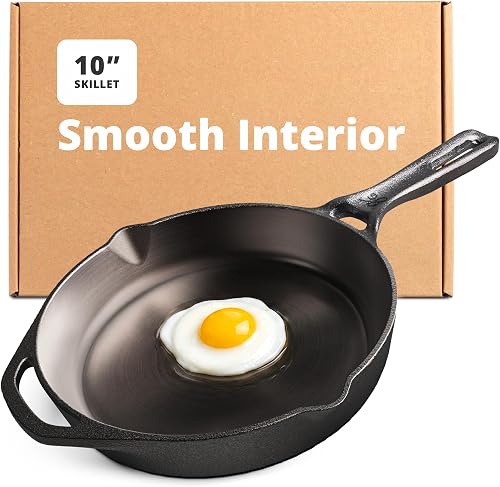
The Greater Goods skillet is precision-milled to create a smooth surface without the need for synthetic coatings. It comes pre-seasoned with organic flaxseed oil, making it ready to use for eggs and other foods right away. The pan includes a primary handle and a helper handle, which is essential for balance. The design is focused on being an everyday workhorse, fitting well on most stove burners. A potential downside is the maintenance required; even with a smooth surface, you must continue to oil the pan after cleaning to maintain the finish.
6. Lancaster Cast Iron Skillet

This skillet is an heirloom-quality piece made in Pennsylvania, designed to be passed down through generations. It’s significantly lighter than many modern cast iron pans, weighing around 6 lbs. The surface is machined for smoothness, which provides a more enjoyable cooking experience for those used to vintage pans. It features a traditional handle and a helper handle for easier lifting. Because it’s a lighter-weight pan, it heats up quickly, which requires more attention to avoid burning food. It’s important to remember that cast iron requires consistent care to keep it in good condition.
7. Lodge Chef Collection Skillet

The Chef Collection is a specialized line from Lodge that focuses on ergonomic improvements. It features spatula-friendly sidewalls, which makes it much easier to flip food compared to traditional steep-walled skillets. The handles are designed for comfort, and the pour spouts are generous. It’s made from the same durable iron as other Lodge products, ensuring excellent heat retention. One drawback is the specific shape, which may not be as versatile as a standard deep-sided skillet for certain types of braising. The surface is textured, so it may feel less “non-stick” than machined pans until it’s well-seasoned.
8. Utopia Kitchen Skillet

This skillet stands out because it includes a lid, which is helpful for steaming or braising food. It’s a 12-inch pan, making it one of the larger options in this article. The pan is pre-seasoned and ready for use on various heat sources, including campfires. The handle is balanced for a secure grip. However, the 12-inch size is quite heavy and may be difficult to store in smaller kitchen cabinets. The lid adds to the total weight, which might be a concern for some users. Like other cast iron products, it requires careful cleaning and drying to avoid rust. Those with health conditions should consult a doctor before using iron-based cooking tools.
9. Lodge Dual Handle Pan

This pan is designed for those who find a long handle awkward or unstable. By using two small handles, it offers better balance and fits easily into ovens or onto grill grates. It’s made in the USA and uses the same durable iron as other Lodge skillets. This design is particularly good for beginners who aren’t used to maneuvering heavy, single-handled pans. A drawback is that you’ll always need two hands to move the pan, which can be inconvenient when you’re trying to pour or plate food. It’s also not as ideal for stovetop tossing as a traditional long-handled skillet.
10. Tramontina Bestow Skillet

The Tramontina Bestow is an enameled cast iron option, which differs from the raw iron pans in this list. The porcelain-enamel exterior and interior provide a smooth, non-stick surface that doesn’t require seasoning. This makes it much easier to clean and maintain. It also includes a moisture-locking lid, which is great for cooking stews or roasts. The main drawback is that enamel can chip if the pan is dropped or hit against hard surfaces. It’s also heavier than some raw cast iron pans. While it’s non-toxic and PTFE-free, it doesn’t provide the same “seasoning” experience as raw iron.
Safety, Care, and Maintenance Tips
Cast iron is a safe, non-toxic material for cooking that relies on natural seasoning rather than synthetic coatings. Because cast iron can infuse food with beneficial natural iron, those with specific health concerns should exercise caution.
Supplemental iron from the pan can occasionally interact with how these drugs are absorbed or processed.
Beyond health considerations, safety in the kitchen requires following manufacturer instructions for care. Always ensure you’re using a secure, balanced grip when transferring hot pans from the stovetop to the oven or grill, especially when wearing oven mitts.
Related guides
- Safety Considerations for Non-Approved Peptides
- 10 Best Non Sleep Deep Rest Protocols for Fast Mental
- How to supplement iron 10 best formulas for your needs
FAQ
Does cast iron really work like a non-stick pan? It can provide a natural non-stick surface once it’s properly seasoned, but it requires more maintenance than modern synthetic coatings. What should I look for on the label? Look for products that clearly state they’re free of PFOA and PTFE and verify the manufacturing materials. Are there industry standards for cast iron quality? Yes, NSF International standards help define safety and quality expectations for food-grade equipment. How do I prevent rust? Always dry your pan thoroughly on the stove after washing and apply a very thin layer of oil before storing it.
Conclusion
Choosing the right pan is an investment in your health that’ll pay off for decades. Once you’ve picked your favorite, don’t be afraid to start cooking immediately. Just remember to keep it seasoned and dry after every use. You’re going to love how much better your meals taste with this simple, timeless tool.