
As an Amazon Associate, we earn from qualifying purchases. This post contains affiliate links – if you buy through them, we may earn a commission at no extra cost to you.
Finding the right gear to track and improve your hand strength can feel overwhelming. Whether you want to monitor progress after an injury or build grip power for sports, the 10 best Grip Strength Trainers and Hand Dynamometers offer many ways to reach your goals. We have selected these items by comparing manufacturer data on materials, resistance ranges, and built-in features like digital displays and counters.
Distinguishing between a tester and a trainer is your first step. A dynamometer uses a high-precision strain gauge to provide a specific measurement of your grip force, often up to 440 lbs. Use these when you need to track recovery milestones or establish a baseline. Conversely, a grip trainer is built for repetitive, adjustable resistance, ranging from 11 to 360 lbs. If your goal is muscle building or endurance, prioritize the trainer.
Many modern devices combine both functions, but check the user profile capacity if you plan to share the tool. Some units store data for up to 19 people, while others are single-user only. For those training for rehabilitation, prioritize models with adjustable handle widths to ensure proper form and comfort.
This guide covers top-rated tools for home use. We focus on clear specs, ease of use, and durability to help you find the right fit for your routine. Please note that this information is for educational purposes and isn’t medical advice. Always speak with a healthcare professional before starting a new exercise program, especially if you have existing health conditions.
Quick Picks
QUICK ANSWER · OUR TOP PICKS AT A GLANCE
Best overall: Electronic Hand Dynamometer. This set pairs a high-precision strain gauge tester—measuring up to 400 lbs—with an adjustable resistance trainer. It’s the top choice if you want to track progress and train in one package.
Best for durability: GD IRON GRIP. Featuring a reinforced 4T steel frame and high-tensile compression springs, this model is engineered for years of heavy use. Its 12-level adjustment range, spanning 26 to 181 lbs, offers a smoother progression than standard grippers.
Best for simple training: AIXPI Grip Trainer. This is a lightweight, portable option for basic strengthening. Use this if you need a straightforward tool for daily forearm and finger conditioning without complex digital features.
Best for multiple users: Digital Hand Dynamometer. With memory for 19 user profiles, this is the standard for clinics or households where multiple people monitor their grip strength. It provides instant feedback, categorizing results as weak, normal, or strong.
Skip these if: You have severe arthritis or recent hand surgery. Always consult a physician before starting resistance training. If you prioritize long-term durability, choose metal-frame models over plastic; plastic units are lighter but may not withstand years of high-resistance, daily squeezing.
Comparison Table
When choosing between these tools, first determine if your priority is tracking data or building raw power. If you need to monitor recovery or athletic progress, choose devices like the Electronic Hand Dynamometer or the Digital Hand Dynamometer; these models store up to 19 user profiles, allowing multiple people to track their grip status within the device’s memory.
If you’re training for maximum strength, look for high-capacity units. The GD DYNO-200 supports up to 440 lbs, making it the strongest option for heavy-duty testing. For those focused on resistance training, the Adjustable Grip Trainer offers the widest range, spanning from 11 to 350 lbs.
Pay close attention to the construction materials, as this dictates the longevity of your equipment. Devices like the GD IRON GRIP use a reinforced 4T steel frame for durability, while the GD DYNO-200 uses S45C carbon steel. If you train daily, avoid plastic-heavy models and prioritize these reinforced frames to prevent wear and tear.
Finally, consider the ergonomics of the handle. If you have small or large hands, select models with adjustable handle widths, such as the GD IRON GRIP or the WESTHEY Digital Hand Dynamometer. This ensures your grip remains secure, preventing the hand fatigue that occurs when a device doesn’t fit your palm size.
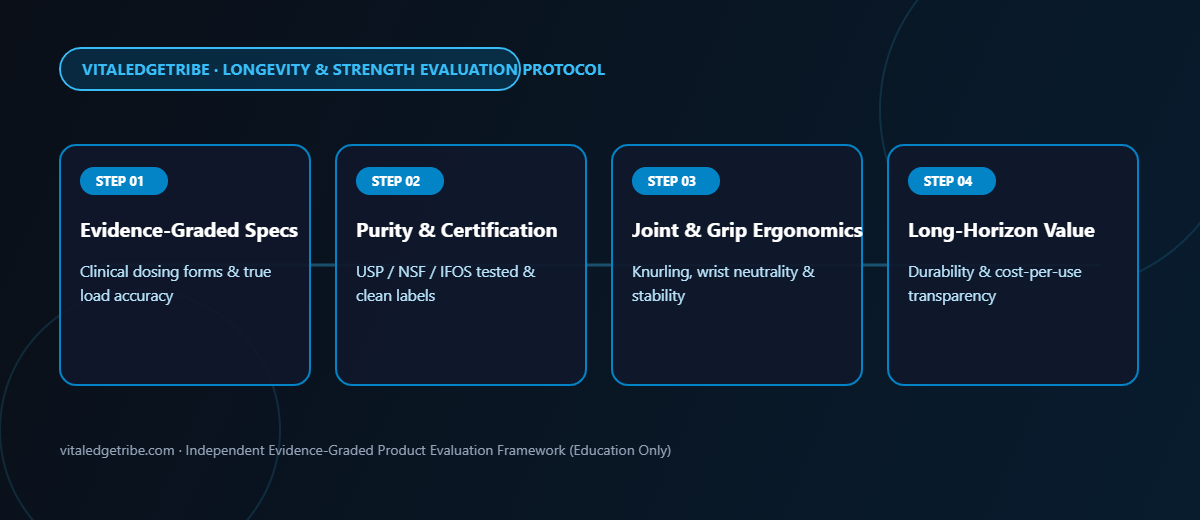
How We Picked the Best Grip Strength Trainers
To select these products, we reviewed manufacturer specifications for accuracy, build materials, and design. We prioritized devices that provide clear, adjustable resistance ranges alongside integrated tracking functions.
Our evaluation focused on material quality, specifically favoring reinforced steel frames, high-tensile springs, and ergonomic, non-slip handles designed to reduce fatigue. We sought tools that accommodate diverse hand sizes through adjustable knobs or handle widths, as these features are essential for maintaining proper form and preventing injury during extended training sessions.
We also prioritized products that include digital displays or mechanical counters. These features allow you to monitor progress through quantifiable metrics rather than relying on subjective feelings of strength. If you’re training for rehabilitation or injury recovery, prioritize models that offer lower starting resistance levels, such as 5kg or 11lbs. Conversely, if you’re an athlete seeking to push your limits, look for devices with high-precision strain gauges capable of measuring up to 440lbs. Please note that these selections are based on publicly available product information rather than a comparison of their own listed specs. Commissions don’t influence our rankings.
Product Reviews
1. Electronic Hand Dynamometer

This device from JTHEW suits users who want to measure and train their grip in one go. It features a high-precision strain gauge to measure up to 400 lbs. You can also use the integrated trainer to build strength with a wide range of adjustable resistance settings. It records 19 user profiles, which helps track results within the device’s memory. The handles are ergonomically designed with knobs to adjust for comfort. The listing doesn’t mention battery life or long-term wear.
2. GD IRON GRIP

The GD IRON GRIP is built for those who prioritize long-lasting construction. It features a 4T steel frame and high-tensile springs. You can adjust the resistance across 12 levels from 26 to 181 lbs, and the handle width is adjustable for different hand sizes. The silicone handles are designed for a secure, non-slip hold. One drawback is the manual adjustment process, which takes more effort than digital models. Another is that it lacks a built-in digital display for tracking specific rep counts.
3. AIXPI Grip Trainer

This trainer is best for those who want a simple, lightweight tool for daily use. It offers adjustable resistance from 11 to 110 lbs. The handle is wrapped in soft material for comfort, and the compact size makes it easy to carry. It’s often used for muscle building or recovery exercises. A limitation is the lack of a digital display or counter to track your progress. Pregnant or breastfeeding readers should speak with a doctor before starting this training.
4. GD DYNO-200

The GD DYNO-200 is designed for high-capacity measurement up to 440 lbs, making it a strong choice for athletes. It’s built with S45C carbon steel, which adds to its durability. The ergonomic handle is designed to stay secure in your hand. You’ll need to provide your own AAA batteries to run the display. One drawback is the lack of a built-in trainer; this is strictly a testing device. It also has a more limited feature set compared to the multi-user digital models. Always consult a physician if you have underlying health conditions.
5. Adjustable Grip Trainer

The QIXIN trainer provides a wide resistance range, from 11 to 350 lbs. It uses a mechanical counter to track your reps automatically. The device is built with an ABS shell and a manganese steel spring for durability. The palm-fit design is meant to reduce hand fatigue. One drawback is that the high-resistance settings may be difficult for beginners to adjust. Those with chronic joint pain should ask a doctor before using this tool.
6. FitBeast Strength Kit

This comprehensive set includes a digital tester, an adjustable trainer, and a finger exerciser. It’s an excellent choice for a complete home program. The digital tester allows you to save individual profiles for multiple users and track weekly progress. The trainer offers resistance up to 160 lbs. Additionally, the finger exerciser is a separate piece that requires its own storage. Talk to a pharmacist about potential interactions if you take medication for arthritis or other conditions.
7. Digital Hand Dynamometer

The WESTHEY device is ideal for families or clinics because it stores data for a large group of individual users. It measures up to 396 lbs and features a large, backlit LCD screen that evaluates your strength as weak, normal, or strong. The handle is adjustable to fit different hand sizes. A drawback is that the screen may be sensitive to glare in bright light. People with implants or heart conditions should consult their doctor before starting any strength training.
8. Grip Trainer Counter

The Hiyoga trainer features a built-in automatic counter to track your repetitions. It offers resistance from 11 to 220 lbs and uses a high-strength stainless steel spring. The TPR handle is designed for a comfortable, anti-slip grip. It also lacks the multi-user memory found in digital dynamometers.
9. AMIR Hand Dynamometer

10. Keep H-Shaped Trainer

The KEEP trainer features a unique six-spring system designed for stable resistance. It allows for adjustments between 11 and 330 lbs. The handle has four-finger grooves for a comfortable, ergonomic fit. It also includes a built-in counter for tracking reps. Additionally, the spring system requires more force to adjust than simpler models. Pregnant individuals or those with chronic conditions should consult a doctor before use.
Safety, Care, and Maintenance Tips
Strength training is generally safe, but you must be careful. Always follow the manufacturer’s instructions and never exceed the suggested resistance levels.
You should consult a doctor or physical therapist before starting if you’re currently recovering from tendon surgery, wrist fractures, or managing conditions like arthritis, tendinitis, or carpal tunnel syndrome.
Stop using these devices immediately if you feel pain or discomfort in your wrists or fingers. Don’t push through sharp sensations, as these can indicate overexertion or underlying injury.
Start with lower resistance settings and monitor your progress as indicated by the device’s current display. If you’re using these tools for rehabilitation, ensure your training intensity aligns specifically with the recovery plan provided by your healthcare provider rather than attempting to reach maximum resistance too quickly.
Related guides
FAQ
Does grip strength training actually work to improve hand power?
Evidence suggests that consistent resistance training can help improve muscle strength as indicated by the device’s measurements. However, the results depend on your consistency, intensity, and individual physical health.
What should I look for on the label when buying a grip trainer?
Look for clear specifications regarding the resistance range and the materials used for the springs and handles. Ensure the device offers the features you need, such as a digital counter or adjustable handle size, to match your personal goals.
Are these trainers suitable for rehabilitation after an injury?
Many of these tools are marketed for rehab, but you must consult a physical therapist or doctor first. They can provide a safe protocol tailored to your specific injury and recovery stage.
Can I use these devices if I have arthritis?
While the manufacturer claims grip training is helpful for managing stiffness, you should ask your doctor if these tools are appropriate for your type of arthritis. Overuse can potentially aggravate inflamed joints, so professional guidance is necessary.
Conclusion
This article is for education only and isn’t medical advice.