Disclosure: As an Amazon Associate I earn from qualifying purchases. VitalEdgeTribe may also earn a commission if you buy through links on this page, at no extra cost to you. Commissions never decide our rankings, and our picks come from reading product listings and public research rather than in-house lab testing.
Medical note: This article is education only and is not medical advice. Talk to a doctor or qualified clinician before starting a new health routine or sleep/recovery tool if you have a medical condition, are pregnant, or take prescription medicines. These statements have not been evaluated by the Food and Drug Administration. This product is not intended to diagnose, treat, cure or prevent any disease.
Finding the best foam rollers for muscle recovery can feel overwhelming. Many options exist, each promising different ways to help your body feel better after a workout. This guide examines popular tools designed to help with muscle soreness and mobility, selected based on materials, design features, and specific recovery needs.
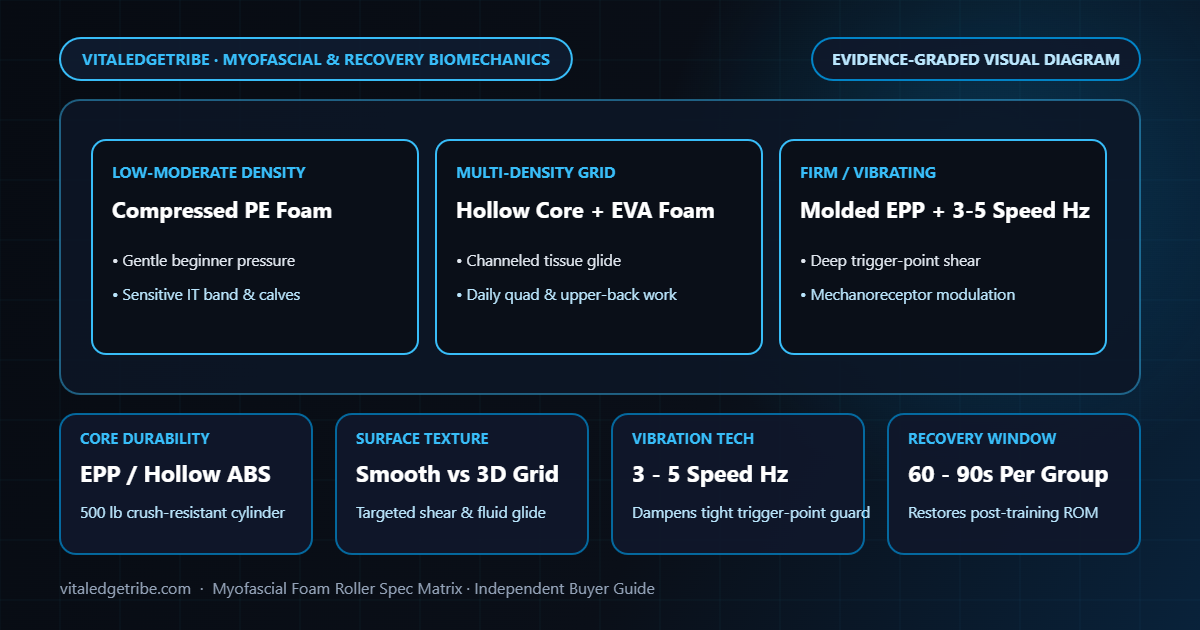
We analyzed product specifications to compare handheld sticks, vibrating rollers, and classic foam shapes. Choosing the right tool depends on your specific goals. If you need deep tissue work, look for firm, high-density foam or textured rollers that mimic a therapist’s hands. If you prefer a gentle approach for balance or rehabilitation, soft-density foam rollers are more appropriate.
Mistakes often occur when users choose a roller that’s too firm for their pain threshold, which can lead to muscle guarding rather than relaxation. If you’re targeting smaller muscle groups like arms or calves, a compact 12-inch roller is more effective than a full-size 36-inch model. For those who want to avoid getting on the floor, handheld sticks offer a portable, standing alternative that reaches 95% of muscles.
Consistency is the primary driver of results. Foam rolling for just 20 minutes after exercise, followed by sessions at 24 and 48 hours, has been shown to reduce recovery time by 20% and increase flexibility by 10%.
This guide covers how these tools function for general muscle maintenance. We don’t provide medical advice; this information is for educational purposes only. Always consult a professional regarding your specific health concerns.
Quick Picks
QUICK ANSWER · OUR TOP PICKS AT A GLANCE
Best overall: TriggerPoint Grid 1.0 – A versatile, durable option for deep tissue work.
Best for beginners: OPTP PRO-Roller – Offers a softer feel for those new to rolling.
Best for deep tissue: RumbleRoller Original – Features textured bumps to target tough knots.
Best vibrating: Therabody WaveRoller – Adds vibration to help release muscle tension.
Skip these if: You have an injury or chronic pain; please ask your doctor before starting.
Comparison Table
| Foam Roller | Best For | Material & Surface | Size & Density |
|---|---|---|---|
| 1. TriggerPoint Grid 1.0 | Best Overall | Hollow-core multi-density EVA grid | 13″ · Firm / Targeted |
| 2. RumbleRoller Original | Deep Tissue Knots | EVA/polyolefin high-profile bumps | Midsize · Extra-Firm |
| 3. Therabody WaveRoller | Vibrating Recovery | Hypoallergenic EVA + silicone waves | 12″ · 5 Vibration Speeds (180m battery) |
| 4. OPTP PRO-Roller | Beginners & Pilates | Closed-cell professional EVA foam | 36″ · Soft / Gentle Compression |
| 5. Tiger Tail Massage Stick | Standing / Handheld | Medical-grade non-flex cushioned grip | 18″ Handheld · User-Controlled |
How We Picked the Best Foam Rollers for Muscle Recovery
We selected these products by reviewing manufacturer specifications and official product details. Our process relies on public data and clear descriptions rather than in-house laboratory testing. We prioritized options that specify materials, such as EVA foam or EPP construction, as these dictate durability and the depth of compression.
We looked for variety in density, size, and shape to fit different recovery preferences. If you need deep tissue work, look for models with textured zones or ridges that mimic a therapist’s hands, such as the TriggerPoint Grid or 321 STRONG. If you prefer stability for balance or Pilates, choose smooth, high-density rollers like the Amazon Basics or OPTP PRO-Roller.
Size dictates your range of motion. Compact 12-inch rollers are best for isolating specific muscle groups like arms or legs and for travel. Midsize or 36-inch rollers provide the stability required for full-body positioning and back exercises.
A common mistake is choosing a texture that’s too aggressive for your pain tolerance. If you’re new to rolling, start with a smooth or lightly textured surface to avoid bruising. If you struggle to get on the floor, consider a handheld stick like the Tiger Tail, which allows you to apply pressure while sitting or standing. The ranking of these products is based on features and doesn’t depend on affiliate commissions.
Product Reviews
1. TriggerPoint Grid 1.0

This roller is a popular choice for athletes who want a firm, targeted massage. Its hollow core design is built to withstand frequent use without losing its shape. The surface features three distinct zones that mimic the feeling of a massage therapist’s hands. These zones help promote blood flow and tissue aeration while you roll. It’s a solid choice for those who need a durable tool for deep tissue work on tight muscles. However, the firm surface may feel too intense for beginners. If you’re pregnant or have a health condition, please check with your doctor before using this or any other recovery tool.
Use this when you need to replicate the sensation of a therapist’s hands. If you’re recovering from a workout, the multi-density GRID pattern is designed to promote tissue aeration through the three-dimensional surface. If you find the pressure too aggressive, shift your weight to the flatter sections of the roller to reduce the intensity.
2. RumbleRoller Original

The RumbleRoller Original is designed specifically for deep tissue massage. It features unique, textured bumps that are engineered to dig into tight muscles and release knots. This midsize version offers a balance between surface area and ease of use. It’s made from a blend of EVA and polyolefin materials, which provides a firm feel. The design is intended to improve mobility more effectively than smooth rollers. One drawback is that the aggressive texture might feel painful for those with very sensitive muscles. Always consult a professional if you’re taking prescription medications or have medical concerns.
Choose the compact version if you primarily need targeted work on small areas or travel frequently. If you require full-body coverage and stability for larger muscle groups, the midsize or full-size options are superior. If you’re new to deep tissue work, start with a smooth roller to gauge your tolerance before moving to these textured bumps.
3. Therabody WaveRoller

The WaveRoller combines traditional foam rolling with modern vibration technology. It offers five intensity settings that you can adjust through an app to suit your comfort level. The surface uses silicone wave grooves to provide better traction and extra pressure on the muscles. It comes with a carrying pouch and a battery that lasts up to 180 minutes. While the vibration can be helpful for releasing tension, the device is heavier than standard rollers due to its internal battery. Speak with your doctor if you have any health conditions or use medical devices.
Use the app to cycle through the five vibration settings if you find standard rolling insufficient for releasing deep tension by a small margin. If you’re traveling, remember to pack the included power adapter, as the 180-minute battery life is finite. Because of the silicone wave grooves, this model provides slightly more traction than standard EVA foam; use this if you find yourself slipping on other rollers.
4. 321 STRONG Roller

This roller uses a patented three-zone design to target different muscle groups. It’s made from BPA-free EVA foam and features a strong, lightweight core. The zones mimic fingers, thumbs, and palms to provide varied levels of pressure. It’s designed to be firm enough for deep tissue work but comfortable enough to use on the back. A potential downside is that the ridges can be uncomfortable for those who prefer a smooth, consistent surface. If you have an injury or are undergoing medical treatment, talk to a doctor before incorporating this into your routine.
If you’re targeting the spine, use the flatter zones to avoid direct pressure on the bone. If you’re working on dense muscle tissue, use the smallest projections to mimic fingertip pressure.
5. Amazon Basics 36-Inch

This is a classic, full-length foam roller that’s simple and effective. Its 36-inch length provides stability for full-body exercises and balance work. The high-density polypropylene construction is firm and durable. It’s lightweight, making it easy to carry to the gym or store at home. Because it’s smooth, it lacks the targeted pressure of textured rollers, which some users may find less effective for deep knot release. Please check with your doctor if you have any medical conditions before starting a new exercise program.
Use this 36-inch length if your primary goal is balance and full-body stability exercises rather than localized trigger point release. Because the polypropylene material is firm and smooth, it’s ideal for beginners who find textured rollers too painful. If you need to clean your equipment frequently, this model is simple to wipe down.
6. OPTP PRO-Roller

Choose this model for Pilates or rehabilitation where you need a stable, soft surface rather than aggressive deep tissue penetration. Because it’s made of closed-cell EVA foam, it’s more hygienic for clinic or gym use than open-cell alternatives. If you’re performing full-body positioning or back exercises, the 36-inch length provides the necessary surface area.
7. Gaiam Restore Compact

This compact roller is designed for portability and targeted work on smaller muscle groups. At 12 inches long, it’s easy to toss into a gym bag or use while traveling. It features a light texture to help stimulate blood flow and ease muscle tension. It’s a good option for isolating specific areas like the arms or legs. Because of its small size, it isn’t well-suited for full-back rolling or large muscle groups. The light texture also provides less intense pressure than more aggressive rollers. If you have any medical concerns, talk to a doctor before using this tool to ensure it’s safe for your situation.
Use this 12-inch roller when you need to isolate tight spots in your arms or legs. If you’re a traveler, the short length makes it a convenient addition to your gym bag. If you find the texture of standard rollers too harsh, the light texture here provides a gentler massage for stimulating blood flow.
8. Tiger Tail Massage Stick

The Tiger Tail is a handheld recovery tool that lets you massage muscles while standing or sitting. It’s popular because it allows for high control without needing to get down on the floor. It’s made from medical-grade, latex-free material and is designed to be non-flexible for deep tissue targeting. It’s portable and fits easily in most bags. The main trade-off is that you must use your own arm strength to apply pressure, which can be tiring. It also can’t provide the same full-body support as a floor roller. Check with your doctor if you’re managing any health conditions or taking medications.
Use this tool if you prefer to remain standing or sitting while you work on your legs, neck, or back. Because it’s a handheld device, you can reach 95% of your own muscles without assistance. If you’re working with a partner, you can reach 100% of your muscle groups.
9. Yes4All Half Roller
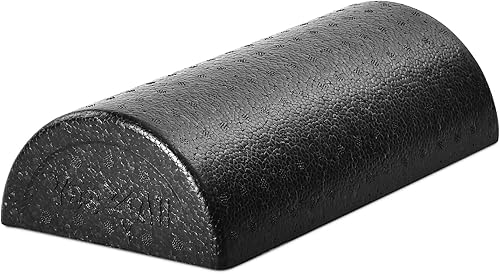
The Yes4All Half Roller features a flat side and a curved side, which provides extra stability. It’s made from high-density EPP foam and is designed to resist deformation. Its short length is compact and easy to store. Because it’s a half-roller, it’s very stable for balance exercises and spine alignment work. It also offers a specific, firm feel that may not be comfortable for everyone. Consult a doctor or physical therapist if you have any medical conditions or are using prescription medicine.
Use the flat side down for maximum stability during balance work or spine alignment. If you’re an athlete requiring controlled resistance, the high-density EPP foam supports up to 250 lb without deforming. If you need to roll out large muscle groups like the IT band or hamstrings, you’ll find this less versatile than a full round roller.
10. Retrospec Relief Roller

This roller is an extra-firm, high-density option designed for deep tissue work. Its simple, round design is easy to use and provides consistent pressure. It’s made from non-toxic materials. This makes it a straightforward choice for athletes looking for a reliable, no-frills tool. The downside is the extra-firm feel, which might be too intense for beginners or those with sensitive tissue. Speak with your doctor if you have health concerns or are on medication.
Use this if you require consistent, high-intensity pressure for deep tissue work. Because it lacks textured nodules, it’s best for users who want uniform compression across a muscle group rather than pinpoint trigger point release. If you’re a beginner, note that the extra-firm construction is designed for durability and performance, not comfort.
Safety, Care, and Maintenance Tips
Using foam rollers is generally considered safe for healthy adults. However, you should talk to a doctor or a physical therapist before starting if you’re pregnant, nursing, or have a chronic medical condition.
Foam rolling should never be done directly over bony areas, acute injuries, or inflamed joints. While some rollers are designed to be firm enough to offer therapy to the muscle groups on either side of the spine, you should avoid rolling directly on the spine itself.
If you feel sharp or stabbing pain, stop immediately. Discomfort during deep tissue work is normal, but sharp pain signals that you’re applying too much pressure or working on an area that isn’t ready for deep release.
Always follow the manufacturer’s instructions for your specific device. High-density rollers are designed for deep tissue work, while softer rollers are better for gentle positioning or rehabilitation. Using the wrong density for your current fitness level can lead to unnecessary soreness or injury.
Before integrating these tools into your routine, discuss your plan with a healthcare provider. They can confirm if your specific recovery needs—whether for back pain, muscle knots, or post-workout stiffness—are best addressed by a handheld stick, a vibrating roller, or a standard textured foam surface. Ensuring the device matches your physical health needs is essential to reducing recovery time and preventing future injuries.
FAQ
Do foam rollers actually fix muscle knots?
Foam rolling may support temporary relief of muscle tension and soreness. The evidence for long-term “fixing” of muscle tissue is limited, so treat it as a tool for comfort rather than a cure.
How do I know which density is right for me?
Beginners often find softer foam more comfortable, while experienced users may prefer high-density or textured surfaces for deeper pressure. Look for labels like “soft” or “high-density” on the product packaging to guide your choice.
Can I use a foam roller on my spine?
Most experts recommend avoiding direct pressure on the spine to prevent injury. Focus on the soft tissue and muscles on either side of the spine instead.
How often should I use a foam roller?
There’s no set rule, but many people use them before or after exercise sessions. Listen to your body and avoid overusing the tool if you feel soreness or pain.
Conclusion
Choosing the right tool depends on your comfort with pressure and the specific areas you want to target. Start with a density that feels manageable and adjust as you gain experience. This article is for education only and isn’t medical advice.