Medical note: This article is for education only and is not medical advice. Talk to a doctor or pharmacist before starting a supplement or changing any treatment, especially if you are pregnant, breastfeeding, take prescription medicines or have a health condition. Individual results vary.
Lower Leg Mobility Aids
Performing heel raises while sitting activates the soleus muscle pump to help lower blood sugar levels.
As an Amazon Associate, we earn from qualifying purchases. This post contains affiliate links – if you buy through them, we may earn a commission at no extra cost to you.
You have been sitting at your desk for four hours. Your legs feel heavy, your ankles are stiff, and you know you should move, but the work never ends. This is a common problem for anyone who spends their day in a chair.
Devices designed for soleus muscle pump heel raises while sitting to lower blood sugar help by encouraging gentle, rhythmic motion. These tools keep your lower body active without requiring you to stand up or leave your workstation. The following picks compare top options for movement and stretching.

1. Step Stool Soleus Pedal

Best for: Office workers wanting simple, silent leg stimulation.
This pedal uses a rolling-press action to stretch the posterior calf muscles while you sit. Its design features a wavy groove to support your feet and dense nodules for a massage sensation. It’s built to encourage a natural foot position, which helps stop you from crossing your legs under the desk.
Using this is straightforward; you simply place your feet on the pedals and rock them. Because it relies on your own movement, it’s completely silent and requires no electricity. It isn’t for someone who wants an automated workout, as you must provide all the physical effort yourself.
If you find yourself constantly shifting or feeling leg stiffness by midday, this device targets the soleus muscle specifically to promote blood circulation. The decision rule is simple: if you need a passive tool to manage soreness while working, use this. If you require high-intensity, motorized resistance to build muscle mass, choose a different device.
Pros:
- Silent operation for office use.
- Encourages better sitting posture.
- Built-in foot massage nodules.
- Stable base prevents tipping.
- No assembly required.
Cons:
- Requires constant user effort.
- No motorized assistance included.
Why this one: This is the best choice if you want a passive, silent tool to keep your legs moving while you focus on work. It utilizes thickened anti-slip pads to ensure the unit stays grounded even during vigorous rocking. If you prefer a machine that does the work for you, look at other motorized options instead.
2. LegXercise MAX

Best for: Individuals seeking automated, passive leg movement.
This device provides a constant back-and-forth motion to simulate walking. It’s a plug-in unit that moves your feet for you, which helps stimulate circulation and soothe legs that feel tired from long periods of inactivity. It weighs 10 lbs, making it manageable to move between rooms. Its dimensions are 14.5 x 12.5 x 5.5 inches, so it fits easily under a desk or in front of a chair.
When you use it, you just place your feet on the pads and select your speed. It doesn’t vibrate and operates quietly to avoid distractions. This device isn’t for users who need a high-intensity workout, as the motion is gentle and specifically designed for passive stimulation.
Pros:
- Automated movement mimics walking.
- Simple plug-in operation.
- Helps reduce leg swelling.
- Compact size for home use.
- Quiet, non-vibrating motion.
Cons:
- Requires an electrical outlet.
- Limited to passive movement only.
- No remote control included.
Why this one: This is ideal for those who want to keep their legs moving with zero effort. If you need a device that allows for active, manual muscle strengthening, this may not provide the resistance you want. If you require more movement, look at the Legxercise Pro model. For even more intense exercise, check out the Ellipse by Legxercise. The decision rule is simple: if you need passive stimulation to alleviate cramps or swelling, choose the MAX. If you want a workout that requires your own effort, choose the other models.
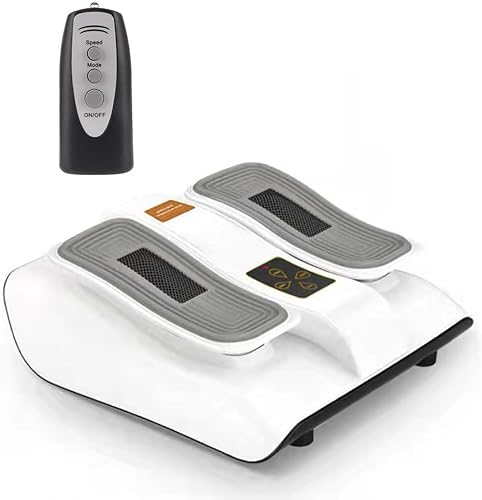
3. Motorized Foot Exerciser

Best for: People needing a guided, motorized circulation routine.
This 2-in-1 device uses electric technology to move your legs in a gentle, cycling motion. It’s built to help combat the effects of a sedentary lifestyle by keeping your joints and muscles active while you remain seated. The system includes a remote to adjust intensity settings easily.
The experience is like having a gentle personal trainer for your feet. You sit, place your feet on the pads, and let the motor handle the rhythm. It isn’t for people who want a manual, floor-based rocker, as this unit is strictly an electric-powered exercise machine.
You should aim for 15 minutes of use each day. Regular use promotes improved blood circulation and offers additional perks like strengthening leg muscles.
Pros:
- Adjustable motorized speed settings.
- Includes remote for convenience.
- Designed for joint-friendly movement.
- Promotes blood circulation effectively.
- Easy to incorporate into routines.
Cons:
- Needs access to power.
- Not for standing use.
Why this one: This is perfect for those who want a consistent, timed exercise session while working or watching television. If you require a device that can be used without electricity, you should consider a mechanical rocker instead. Remember that this unit is strictly for seated use; attempting to stand on it will damage the motor and compromise your safety. Choose this model if you need passive, effortless movement to revitalize your legs during long hours of inactivity.
4. Milageto Heel Raise Machine with Phone Holder Standing Heel Raise

Best for: Users dedicated to specific calf and mobility training.
This is a piece of home fitness equipment designed for controlled heel raises and deep leg stretching. It features an adjustable handlebar with a phone holder, allowing you to stay entertained while you train. It’s built with a stable, anti-slip base to ensure safety during your movements.
Using this machine feels like a standard gym session at home. You stand on the raised base and perform calf raises, which allows for a deeper range of motion than doing them on flat ground. The unit accommodates foot lengths from 32 to 42, ensuring a secure fit for most users.
If you have very limited space, consider the dimensions of 55 x 31 x 120 cm. While it weighs only 4.35 kg and is easy to move, it remains a taller, standing-focused piece of equipment. Avoid this if you require seated exercises, as it’s engineered specifically for standing lower-body training.
Pros:
- Dedicated calf training design.
- Includes convenient phone holder.
- Adjustable handlebar for support.
- Stable, anti-slip foot base.
- Lightweight and easy to move.
Cons:
- Occupies more floor space.
- Designed mainly for standing.
Why this one: This is the best choice if you’re serious about calf strength and mobility. If your goal is strictly seated movement, this equipment will be more than you need. Use the adjustable handlebar to maintain balance during deep stretches. If you’re training for flexibility, the contoured, cushioned surface provides the necessary comfort for longer sessions.
5. Calf Raise Block

Best for: Athletes wanting heavy-duty, progressive calf training.
This steel block is built to handle up to 880 lbs, making it one of the most durable options for serious strength training. It offers three height levels and three slant angles (0°, 10°, and 20°), which you can adjust using push-pins. It also includes resistance bands for adding tension to your workouts.
Training with this block is for those who want to use progressive overload to build muscle. You can stand on it for deep stretches or use it for weighted calf raises. It isn’t for someone looking for a simple, passive foot rocker, as this is a piece of professional-grade strength equipment.
Pros:
- Extremely high weight capacity.
- Versatile height and angle settings.
- Includes resistance bands for tension.
- Durable steel construction.
- No tools required for adjustments.
Cons:
- Requires active, focused effort.
- Not a passive seated tool.
Why this one: This is the best pick for anyone looking to increase calf strength and ankle mobility through resistance. If you only want a gentle movement aid for under your desk, this will be too intense.
Use the 0° setting for standard raises, or shift to the 10° or 20° angles to target ankle dorsiflexion and release tight Achilles tendons. If you’re a lifter, use the built-in hooks to attach the included resistance bands. If you’re a desk worker, use it for short, daily mobility routines. If you feel wobbling, check that the push-pins are fully locked; the steel frame is engineered to stay planted even when supporting heavy resistance.
6. Desky Classic Foot Rocker

Best for: Desk workers wanting a simple, manual rocking motion.
This foot rocker encourages active sitting by facilitating a natural back-and-forth motion. It features a textured, anti-slip surface to keep your feet secure and a smooth base that glides on hard floors without leaving marks. It arrives fully assembled, so you can start using it immediately.
Using this tool is intuitive. You simply rest your feet on the platform and allow them to rock as you work. The design helps align your hips and knees by raising your feet to a more ergonomic position. Because the construction is lightweight, you can easily move it between your office and home workstations.
This isn’t for users seeking motorized assistance or adjustable resistance levels. If you require a device that moves your legs for you, or one where you can dial in specific tension, this manual model with its fixed resistance won’t meet your needs.
Pros:
- No assembly required.
- Encourages natural leg movement.
- Textured anti-slip surface.
- Lightweight and portable.
- Supports better seating posture.
- High-strength materials for daily use.
Cons:
- Completely manual operation.
- No way to adjust resistance.
Why this one: This is an ideal choice for someone who wants a no-fuss, manual way to keep their legs active. It’s built to withstand daily use without losing its shape. However, if you prefer a machine that provides powered movement or variable resistance, you should look at motorized options instead. This rocker is best for those who prioritize simplicity and immediate, out-of-the-box functionality.
7. Slant Board Calf Stretcher

Best for: Those prioritizing deep stretching and ankle flexibility.
This slant board is crafted from 11-ply poplar and offers five different incline settings: 23°, 30°, 35°, 40°, and 45°. It’s designed to help with warm-ups, cooldowns, and general lower-body mobility. The surface uses textured PVC sandpaper for traction, and the base is made with non-slip EVA to keep it steady.
To use it, select the angle that matches your current flexibility. You can use it with one or both feet to stretch your calves and ankles. Because it supports up to 460 lbs, it’s robust enough for squats if you need heel elevation. It’s portable and can be used in the office, gym, or at home.
This isn’t for someone who wants a device that provides active movement while sitting, as this is strictly a stationary stretching tool. If you need to keep your legs moving while at a desk, choose a different device.
Pros:
- Five adjustable incline angles.
- Sturdy, 11-ply high-grade wood construction.
- Portable and easy to store at only 4.5 lbs.
- Provides deep calf and ankle stretches.
- High 460 lbs weight capacity.
Cons:
- Requires standing to use.
- Not for seated movement or passive exercise.
Why this one: This is the best pick for improving long-term flexibility and ankle health. It arrives fully assembled with a training guide to ensure proper form. If you’re specifically looking for a way to keep your legs moving while sitting at a desk, this isn’t the right tool.
How to Choose Soleus Heel Raises for Sitting to Lower Blood Sugar
Choosing the right device depends on your specific daily goals and your physical environment. Think about whether you need an active tool to build muscle or a passive tool to simply keep blood flowing while you work.
If your primary goal is muscle strengthening or mobility, look for a calf raise block or a steel-framed machine. These allow for progressive loading, such as the 880-lb capacity steel blocks that include resistance bands. If you’re focused on circulation, choose a motorized exerciser. These devices mimic walking motions to combat the effects of a sedentary lifestyle.
- Do you prefer a device that moves your legs for you? Motorized units provide passive exercise, while manual rockers require your own effort.
- Is your primary goal muscle strengthening or just circulation? Strengthening requires adjustable angles and weight capacity, whereas circulation benefits from consistent, low-effort movement.
- Do you have space to stand up? Some machines are strictly for seated use, while others are designed for standing heel raises.
- Do you need a tool that operates silently? Look for bases with thickened anti-slip pads to dampen noise.
- Is an electrical outlet available? Passive motorized machines require power, while manual foot rockers do not.
A common mistake is choosing a motorized unit when you need deep muscle activation. If you want to relieve leg stiffness, a manual pedal with massage nodules is often more effective than a passive motorized device.
Related guides
- Key Muscle-Health Metabolic Markers
- Aging, Muscle Mass, and Metabolic Health
- Skeletal Muscle Metabolism: Core Concepts
Frequently Asked Questions
Will these devices help with blood sugar management?
While keeping your legs active can promote better circulation and metabolism, these devices are designed to support movement rather than treat medical conditions. Regular movement is a good way to stay active, but you should discuss specific health concerns or blood sugar management plans with a medical professional.
Can I use these devices while wearing shoes?
Most of these devices are designed to be used with or without shoes, depending on your comfort. The anti-slip surfaces provided on units like the Step Stool Soleus Pedal or the Desky Classic Foot Rocker are intended to maintain grip regardless of your footwear, but checking the surface material is recommended.
How do I keep the device clean?
Keeping your device clean is usually simple, as most feature anti-slip pads or textured surfaces that can be wiped down. You should use a damp cloth and mild soap for regular maintenance, ensuring the device is completely dry before you use it again to maintain the effectiveness of the anti-slip features.
Is it safe to use these if I have joint pain?
Many of these devices are specifically designed to provide low-impact, joint-friendly movement. However, if you have existing joint pain or a history of injury, you should consult a doctor before starting a new routine to ensure the motion is appropriate for your specific health needs and physical limitations.
What is included in the box?
Most models arrive with the unit itself and a basic instruction guide, while some dedicated trainers like the Calf Raise Block include extra training posters or resistance bands. You should always check the listing details for your specific model to see if batteries or power adapters are included for motorized versions.
Is this type of equipment actually worth owning?
Some users find these devices helpful for breaking up the monotony of long hours spent sitting.
The Verdict for Most People
For most people, the Step Stool Soleus Pedal is the best choice. It offers a simple, manual way to encourage movement and blood flow without the need for electricity or complicated settings. It fits easily under a desk and helps correct posture by discouraging leg-crossing, which reduces spinal strain.
If you require automated movement to assist with circulation due to limited mobility, the Motorized Foot Exerciser is a more appropriate pick. This device provides consistent, passive stimulation that requires no physical effort, making it ideal for those who sit for long hours.
However, if your goal is intensive strength training or injury rehabilitation, choose a dedicated tool like the FERALFALCON Calf Raise Block. Its steel frame supports up to 880 lbs, allowing for progressive overload that simple pedals can’t provide. Always consider your primary goal—whether it’s passive circulation, posture correction, or active muscle building—before making your final decision. Choosing the wrong category often leads to unused equipment that takes up valuable floor space.