
Medical note: This article is for education only and is not medical advice. Talk to a doctor or pharmacist before starting a supplement or changing any treatment, especially if you are pregnant, breastfeeding, take prescription medicines or have a health condition. Individual results vary.
As an Amazon Associate, we earn from qualifying purchases. This post contains affiliate links – if you buy through them, we may earn a commission at no extra cost to you.
Goji berries have become a pantry staple for those looking to add a boost of color and flavor to their daily routine. Many shoppers wonder about the source of goji berries, as these small fruits are often associated with distant mountains and ancient traditions. Understanding the origin and processing of these berries helps you decide which ones fit your snacks or tea habits best. This guide breaks down the key differences between the options so you can pick the right bag with confidence. For most people, Anthony’s Organic Goji Berries offer a reliable, batch-tested choice that works well in almost any recipe.
What Actually Matters
Geographic Origin
The location where the fruit is grown changes the soil and climate, which affects the final taste. Many berries come from the Ningxia Province or the Tibetan Plateau. These regions are famous for their specific conditions that lead to a sweet-tart profile. You can check the packaging for the country of origin to see if the fruit comes from these recognized areas. While location is a guide, it isn’t the only factor for quality.
Texture and Moisture
Some berries are dried until they’re firm and leathery, while others are kept slightly moist. If you want a snack to eat straight from the bag, a softer, fleshier berry is usually better. If you plan to bake or steep them in hot liquid, a harder berry will rehydrate quickly. Look for information about the drying process, such as shade-drying or sun-drying, which can influence how much moisture stays inside the fruit.
Organic and Safety Certification
Because you’re likely eating these raw or in tea, knowing how they were grown is important. Look for labels that mention organic certification or batch testing for purity. These labels ensure that the fruit was grown without certain synthetic pesticides or additives. You can verify these claims by looking for official seals on the product bag. Always check if the brand mentions specific testing for gluten or other common allergens if you have dietary restrictions.
Packaging Quality
How the berries are stored determines how long they stay fresh in your home. Some brands use simple plastic bags, while others use foil pouches or jars to keep out light and moisture. Exposure to air can cause the berries to lose their vibrant color and texture. If you don’t plan to eat the whole bag quickly, a resealable pouch or a solid jar is a better choice to keep the fruit at its best.
1. Anthony’s Organic Goji Berries

Best for: Everyday use and versatile recipes.
These berries are a solid choice for those who want a simple, organic product. Because they’re batch-tested for gluten, they provide extra assurance for people with specific dietary needs. They work well in trail mixes or oatmeal, offering a standard dried texture that’s easy to manage.
This product isn’t for someone looking for a soft, moist berry to eat by the handful, as they’re dried to a standard commercial finish. If you prefer a very fleshy fruit, you might find these a bit firm compared to specialty moist varieties.
Pros:
- Certified organic and non-GMO.
- Verified gluten-free through batch testing.
- No additives or preservatives used.
- Versatile for snacking or tea.
Cons:
- Texture is standard dried fruit.
2. Dragon Herbs Heaven Mountain Goji Berries 8 oz. (227g)

Best for: Those who prefer a soft, moist texture.
These berries stand out because they’re kept moist rather than being dried to a hard, leathery state. The brand uses a custom foil pouch to protect the fruit from light and air, which helps maintain that unique texture. They’re ideal if you find typical dried berries too tough to chew.
If you’re used to very dry, crunchy berries, the softer feel of these might surprise you.
Pros:
- Moist and fleshy texture.
- Protective foil packaging included.
- No added sugars or colors.
- Specifically handled for moisture retention.
Cons:
- Requires careful storage once opened.
3. RUBYST Premium Organic Dried Goji Berries

Best for: Those who prioritize size and specific origin in their goji berries.
RUBYST focuses on selecting the top 3% of their harvest from a 2,000-acre managed base. This rigorous process yields larger, more uniform berries with a distinct crisp-chewy bite. Because they originate from Zhongning, China, they offer a consistent, layered sweet-tart flavor profile with a light herbal finish. The larger size makes them an excellent choice for yogurt, oatmeal, or salads where you want the fruit to stand out visually.
This product isn’t for people who prefer smaller, more concentrated berry sizes or wild-harvested varieties. If you require a softer texture, you should rehydrate the berries before use. Those who prefer a purely sweet snack should note the authentic, slightly tart profile that contains no added sugar.
Pros:
- Extra-large berry size.
- Sourced from the iconic Zhongning region.
- Consistent sweet-tart flavor.
- No added sugar or artificial flavors.
Cons:
- Limited to specific top-tier harvest selections.
- Requires rehydration for a softer, less chewy texture.
4. Authentic Tibetan Goji Berries

Best for: Those seeking wildcrafted, shade-dried fruit.
These berries are hand-harvested and shade-dried, a traditional method meant to preserve the integrity of the fruit. Because they’re wildcrafted from pristine Tibetan valleys, they offer a rustic experience compared to farm-grown alternatives. They remain a clean, simple snack containing no added sugar, sulfites, or preservatives.
This product isn’t for buyers who prefer the uniformity of large, farm-managed berries. Since these are authentic Lycium Eleagnus, you should expect natural variation in the size and color of the berries within the bag. If you prioritize consistent, industrial-grade sizing, these wildcrafted berries may surprise you.
Pros:
- Wildcrafted and hand-harvested.
- Traditional shade-drying process.
- No sulfites or preservatives.
- Pure whole fruit.
Cons:
- Natural variation in berry size.
Use these berries to fuel your day during hiking or post-workout recovery. They provide plant-based fiber, iron, and vitamins A and C. Add them to oatmeal, yogurt, or teas for a burst of natural sweetness.
5. Dried Black Goji Berry -8.81oz/250g-100% Natural Wild Black Wolfberry -黑枸杞-Premium

Best for: Herbal tea enthusiasts.
Black goji berries differ significantly from common red varieties. They’re prized for their dark color and are packed with proanthocyanidins, goji polysaccharides, and essential amino acids.
These berries aren’t for those seeking a standard snacking fruit. If you want a quick, sweet snack for trail mix, you’ll be disappointed. The flavor and usage focus on rehydration and tea making. You should chew them directly only if you prefer a mild, naturally sweet taste.
To prepare tea, steep the berries in water between 50–75°C (120–170°F) for 5 minutes. You can re-steep them until the water remains colorless, then eat the berries for maximum nutrition. Alternatively, soak them in wine; you can drink this immediately, though waiting 2–4 weeks produces a deeper flavor.
Pros:
- Unique color and nutrient profile.
- Excellent for herbal tea.
- 100% natural wild fruit.
- Re-steepable berries.
Cons:
- Not ideal for traditional snacking.
- Requires specific water temperatures.
Storage: Keep the bag tightly sealed in a cool, dry place away from sunlight to maintain freshness.
6. Navitas Organics Goji Berries

Best for: Smoothies and blending.
Navitas is well-known for sourcing quality superfoods, and these berries are no exception. They’re vine-ripened and gently dehydrated, which helps keep their flavor intact. Their earthy-sweet taste blends very well into smoothies or oatmeal without overpowering other ingredients.
If you prioritize nutritional density, note that each serving delivers 140% of your daily value of vitamin A.
These berries are sourced from the Tibetan Plateau. They’re hand-harvested, which ensures premium quality, but be aware that they carry the traditional, firmer texture of dehydrated wolfberries. If you’re looking for a very soft, moist berry, these are more on the traditional dry side.
Pros:
- USDA organic and non-GMO.
- Good for blending in smoothies.
- High vitamin A content.
- Reliable brand reputation.
Cons:
- Standard dried fruit texture.
- Not intended for bulk storage.
7. Viva Naturals Organic Dried Goji Berries

Best for: Making goji berry tea.
These berries are shade-dried in the Himalayas, resulting in a tangy flavor that works very well when steeped in hot water. They’re versatile enough for baking and snacking, but their flavor profile is particularly suited to liquids. They’re certified across many categories, including Paleo and vegan.
This product isn’t for someone who wants a fresh fruit experience, as they’re a dried product. If you don’t plan on rehydrating them in tea or recipes, they may feel chewy. Decide based on your texture preference: if you enjoy a tart, dense snack, eat them by the handful. If you prefer a softer bite, use them as a topper for yogurt or smoothies.
Pros:
- Excellent for tea and juice.
- Shade-dried in the Himalayas.
- Certified organic and non-GMO.
- Accommodates many dietary lifestyles.
- Source of Iron and vitamin C.
Cons:
- Can be chewy if eaten dry.
- Requires preparation for optimal texture.
Mistaking these for fresh fruit is a common error. Expect a chewy, concentrated snack that’s best used as a substitute for raisins or chocolate chips in your trail mix.
8. Roots Circle USDA Organic Dried Goji Berries 14.1oz Jar 1

Best for: People who want jar packaging.
The standout feature here is the storage jar. If you find bags difficult to manage or if you want to keep your pantry looking organized, this jar is a practical solution. The berries inside are organic and raw, providing a clean snacking option that’s easy to access.
Pros:
- Convenient jar packaging.
- Certified USDA organic.
- Raw and natural.
- Easy to reseal.
Cons:
- Packaging is bulkier than bags.
- Higher waste footprint.
9. Food to Live Organic Goji Berries

Best for: Those who want raw, sun-dried quality.
These berries are sun-dried, which the brand claims helps maintain their raw qualities. They’re described as large and juicy, making them a good middle ground for people who want a bit more texture than a standard, rock-hard berry.
This product isn’t for someone who dislikes the natural variation that comes with sun-drying. Because they aren’t processed in a factory to have a uniform moisture level, some berries may be slightly firmer than others. If you prefer a consistent, soft bite in every handful, these may surprise you.
Pros:
- Sun-dried for raw quality.
- Large and juicy texture.
- Organic and non-GMO.
- Satisfaction guarantee policy.
Cons:
- Natural variation in texture.
If you’re unsatisfied with the quality or simply unhappy with your purchase, you can request a full refund or a replacement. You must act within 30 days of your purchase to utilize this guarantee.
10. Alovitox Dried Goji Berries
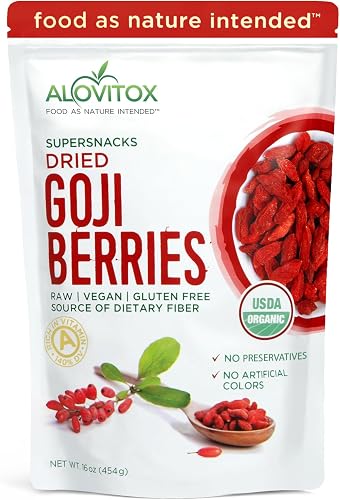
Best for: A vitamin-rich, daily snack.
Sourced from the fertile valleys of Ningxia Province, these berries represent the classic red goji. The brand prioritizes sustainable farming, appealing to shoppers who value transparent sourcing. They offer a simple, high-vitamin option for a quick health boost.
This product isn’t for the buyer seeking specialty, wildcrafted, or moist-processed fruit. These are traditional, high-quality dried berries meant for reliable daily consumption.
A common mistake is expecting a soft, fresh texture. Because these are dried, they’re best suited for mixing into yogurt or smoothies rather than eating plain if you prefer moisture. If you need a snack that holds up in a pantry for months, this is your choice. If you require a fresh, hydrated texture, look elsewhere.
Pros:
- Sourced from Ningxia Province.
- Sustainably farmed.
- High in vitamin A.
- No pesticides or chemicals.
Cons:
- Traditional dried texture.
Who Should Buy Which
If you use goji berries daily in smoothies or oatmeal, Navitas Organics is a dependable choice. For the tea lover who wants a berry that releases flavor quickly, Viva Naturals is the best fit.
If you’re tired of flimsy bags and want a permanent pantry container, Roots Circle is the way to go. If you prioritize the softest texture possible for snacking, Dragon Herbs Heaven Mountain is the premium option. These use a custom foil pouch to retain moisture, avoiding the leathery, rock-hard texture common in standard dried goji.
For the person buying their first bag and wanting a safe, verified product, Anthony’s Organic Goji Berries remains the most straightforward pick. They batch-test for gluten, making them a reliable entry point. If you want a specific culinary experience, RUBYST offers a crisp-chewy bite from the top 3% of their harvest. Finally, if you want to experiment with flavor profiles, GrHerleey’s black goji berries are unique, as they’re designed to be steeped in water or wine rather than eaten as a standard snack.
Mistakes That Catch Buyers Out
- Judging quality by the color alone, as some natural variations in shade are normal for dried fruit.
- Assuming all goji berries are the same texture, ignoring the difference between sun-dried and moist-processed varieties.
- Choosing a large bulk bag without considering how quickly you’ll use them, leading to stale fruit.
- Thinking that “wildcrafted” automatically means better taste, when it often just means more variation in size and texture.
The best way to enjoy these berries is to pick the one that matches how you plan to eat them. If you want a moist snack, look for the special packaging of Dragon Herbs Heaven Mountain. If you want a reliable pantry staple, Anthony’s Organic Goji Berries are a great start. Always check the origin on the bag to understand the soil and climate conditions of the region where the fruit was grown.
Frequently Asked Questions
Do goji berries need to be refrigerated?
Most dried goji berries don’t need to be refrigerated if they’re kept in a cool, dry place. However, if you live in a very hot or humid climate, keeping them in the fridge can help them stay fresh for longer. Always ensure the bag or jar is sealed tightly to prevent moisture from getting inside.
How can I tell if my goji berries have gone bad?
Fresh dried goji berries should have a vibrant color and a pleasant, sweet-tart smell. If you notice a sour or rancid odor, or if you see any signs of mold, you should discard them. They may become harder, which is normal, but they should never have a sticky or “off” texture that suggests spoilage.
Can I eat goji berries every day?
Yes, many people consume a small handful of goji berries daily as part of a balanced diet. They’re a source of vitamins and antioxidants. As with any food, it’s best to stick to moderate portion sizes, typically around 1-2 ounces, to enjoy them as a supplement to your regular meals.
Are all goji berries from China?
While many of the world’s goji berries are grown in China, particularly in the Ningxia Province and the Tibetan Plateau, they can be grown in other regions. Always check the product label for the country of origin. The U.S. Department of Agriculture provides resources on food labeling requirements that can help you understand where your imported goods are sourced.
Why do some goji berries taste bitter?
A slight herbal or bitter finish is a natural characteristic of some goji varieties, especially those from certain regions. If you find them too bitter, try rehydrating them in hot water or mixing them with sweeter ingredients like yogurt or granola. The quality and the specific type of berry can also influence how pronounced that herbal taste is.
Conclusion
Whether you enjoy them stirred into your morning oatmeal or tossed into a handful of almonds, these vibrant berries are a simple way to brighten your meals. Grab a bag today and start experimenting with a few new recipes. You’ll love how easily they add a chewy, sweet pop to your favorite snacks.