



Table of Contents
For proactive patients managing Sleep Apnea, Continuous Positive Airway Pressure (CPAP) therapy is a foundational intervention. While CPAP ensures consistent airflow, preventing dangerous pauses in breathing, successful treatment is sometimes complicated by uncomfortable CPAP side effects.
The most frequent issue reported is aerophagia, or the involuntary air swallowing that occurs during sleep while using the CPAP machine.
This excess air swallowing leads directly to significant Gastrointestinal Distress, manifesting as severe bloating, excessive gas, and sharp abdominal discomfort. Symptoms like frequent burping and dyspepsia critically disrupt sleep continuity, compromising the very goal of the therapy, restorative rest.
When sleep is repeatedly interrupted, even briefly, the brain’s vital cleansing process is compromised. We are referring to the glymphatic system, the mechanism responsible for clearing metabolic waste and toxins from the brain during deep sleep.
If aerophagia prevents truly restorative sleep, it compromises this crucial preventative function against cognitive decline. Addressing Aerophagia causes and finding the right Aerophagia treatment is therefore not just about comfort, it is about boosting brain detox and ensuring long-term neurological health.
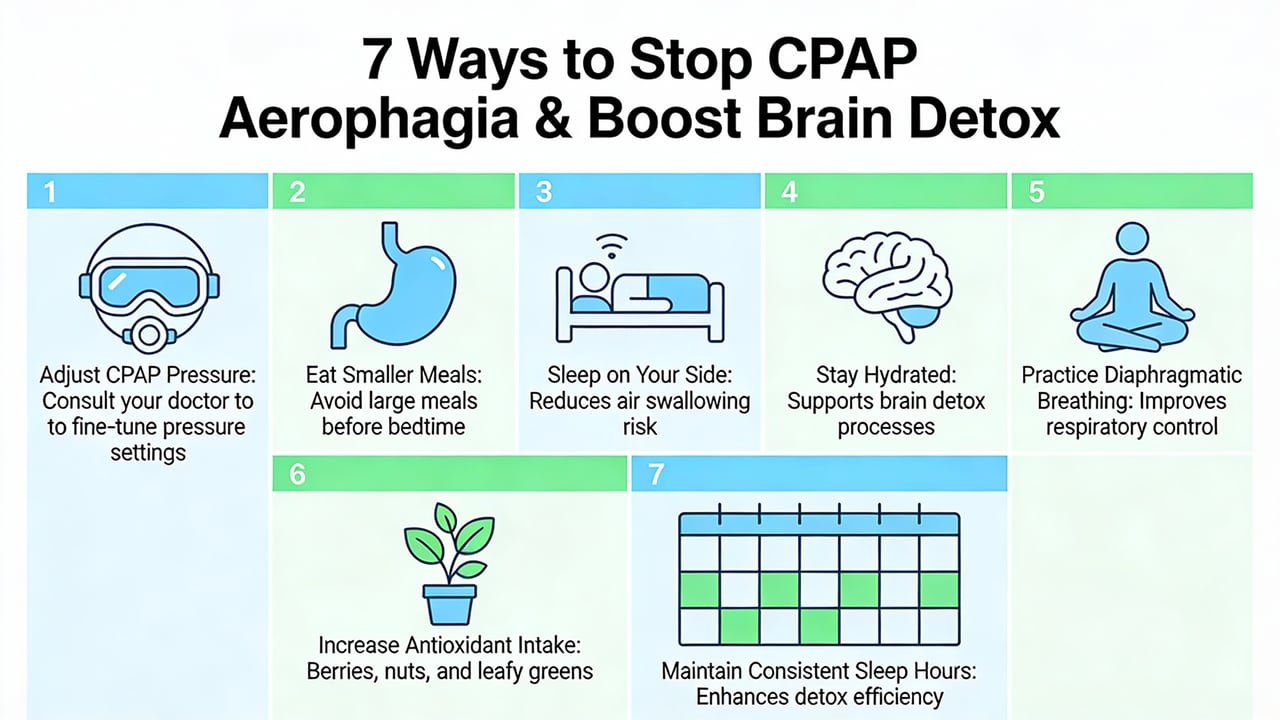
Below are seven actionable, medically-informed strategies designed to help you treat aerophagia, prevent aerophagia, and optimize the quality of your CPAP therapy.
The Critical Link: Aerophagia, Sleep Disruption, and Brain Health
Understanding the immediate discomfort of aerophagia is vital. This common side effect of CPAP therapy often manifests as severe bloating, abdominal discomfort, and disruptive frequent burping.
However, the long-term neurological risk posed by chronic sleep disruption warrants serious attention from proactive patients.
When CPAP side effects like severe gas and resulting gastrointestinal distress cause you to wake frequently, your brain’s natural cleansing cycle is severely compromised.
The Glymphatic System: Your Brain’s Essential Detox Pathway
During deep, restorative sleep (specifically slow-wave sleep), your brain activates the glymphatic system.
This is a complex, fluid-based waste clearance pathway that flushes metabolic toxins, including harmful proteins like amyloid beta, out of the cerebral tissue.
In short, the glymphatic system is essential for preventative neurological health and protecting against long-term cognitive decline.
Interrupted or poor quality sleep, often caused by the disruptive aerophagia symptoms forcing you to remove your mask, drastically compromises this system’s efficiency.
Therefore, managing CPAP aerophagia is not simply about immediate comfort. It is about maintaining critical cerebral perfusion and optimizing vital preventative detox pathways.
To ensure optimal adherence to CPAP therapy and achieve the deeper sleep necessary for brain cleansing, we must proactively address the underlying aerophagia causes and seek effective aerophagia treatment.
Key Takeaways: Why Treating Aerophagia Matters
Understanding and mitigating CPAP aerophagia is not merely about managing immediate discomfort, it is a critical component of maximizing the neuroprotective benefits of your therapy. Here are the core insights for proactive patients managing Sleep Apnea:
Aerophagia, often described as air swallowing, is a common CPAP side effect leading to significant bloating, abdominal discomfort, and frequent burping (Gastrointestinal Distress), which severely disrupts restorative deep sleep.
Uninterrupted deep sleep is essential for the function of the glymphatic system, the brain’s dedicated pathway for clearing metabolic waste. Impaired sleep compromises this vital preventative function against cognitive decline.
To effectively prevent aerophagia, patients must explore advanced strategies such as optimizing humidity, utilizing positional therapy, and considering the transition to an Auto-Adjusting Positive Airway Pressure(APAP) device.
CRITICAL WARNING: Never attempt to self-adjust your CPAP pressure settings. Pressure modulation is a clinical decision that must be made in consultation with a qualified sleep specialist to maintain the therapeutic efficacy of your CPAP therapy.
7 Actionable Strategies to Treat CPAP Aerophagia
Addressing aerophagia symptoms is crucial for maintaining the neuroprotective benefits of effective CPAP therapy. Do not dismiss bloating, gas, or frequent burping as minor inconveniences, these are clear signals that your therapeutic settings require refinement.
Mitigating air swallowing, a common CPAP side effect, requires a systematic, multi-faceted approach involving clinical consultation, equipment fine-tuning, and behavioral adjustments. When you successfully treat aerophagia, you stabilize your sleep and maximize cerebral waste clearance.
1. Pressure Modulation and Specialist Consultation
The most frequent cause of excessive air swallowing is inappropriate pressure settings. If the Continuous Positive Airway Pressure (CPAP) setting is too high for your current physiological needs, the forced air can easily overcome the esophageal sphincter, pushing air directly into the stomach and causing significant gastrointestinal distress.
CRITICAL WARNING: You must never attempt to adjust the pressure settings on your CPAP machine yourself. Self-adjusting pressure is dangerous, as it can compromise the treatment of your Sleep Apnea (Sleep Breathing Disorder) or even cause breathing difficulties.
Consult with your sleep specialist immediately. They can review your compliance data and initiate a formal pressure titration study. Achieving optimal pressure is the cornerstone of successful CPAP therapy and the first step to mitigating Aerophagia causes.
“Truly grateful for this home sleep test. Fair pricing and improved my sleep!” - Dawn G., Verified Tester via sleepdoctor.com
2. Utilizing Ramp Features and Auto-Adjusting PAP
Many modern CPAP machines include a 'ramp' feature. This function begins therapy at a lower, more comfortable pressure level and gradually increases it over a set time period (e.g., 5 to 30 minutes) until the prescribed therapeutic pressure is reached.
This gentle introduction allows your body, particularly your digestive system, time to adapt to the airflow, which helps to prevent aerophagia at the onset of sleep.
Alternatively, consider utilizing an Auto-Adjusting Positive Airway Pressure (APAP) device. APAP machines automatically vary the pressure moment-to-moment based on your breathing resistance. This ensures you receive only the minimum effective pressure needed, significantly reducing the risk of excess air being forced down the esophagus and mitigating abdominal discomfort.
3. Optimizing Your Interface: Nasal vs. Oral Masks
The selection of your CPAP Mask Types (interface) significantly impacts the likelihood of developing aerophagia.
If you are a habitual mouth breather, using a nasal mask or nasal pillows without an effective chin strap can cause you to swallow large volumes of air as you attempt to compensate for leaks or dryness.
If you experience consistent air leakage or find yourself opening your mouth, switching to a full-face mask, which covers both the nose and mouth, may stabilize the pressure delivery and reduce air swallowing.
Conversely, for some patients, the high pressure required for a full-face mask can increase the force on the esophagus. Working closely with a respiratory therapist to find the perfect fit and style is essential for long-term comfort and effective aerophagia treatment.
CPAP Mask Comparison for Aerophagia Risk
Mask Type | Primary Benefit | Aerophagia Risk Factor | Best For |
|---|---|---|---|
Nasal Pillows | Minimal contact, high comfort. | High (if mouth breathing occurs). | Nose breathers, low pressure. |
Nasal Mask | Effective seal, less bulk than full face. | Moderate to High. | Patients using chin straps. |
Full-Face Mask | Accommodates mouth breathing, stabilizes pressure. | Moderate (due to higher potential pressure settings). | Mouth breathers, high pressure needs. |
4. Positional Strategies for Airflow Management
Sleeping position plays a critical role in managing aerophagia symptoms. When you sleep flat on your back (the supine position), gravity can increase the likelihood of air entering the stomach, especially if your head is positioned awkwardly.
Implement positional therapy by sleeping on your side. Furthermore, elevating the head of the bed slightly (using risers or a wedge pillow) reduces pressure on the esophagus.
This elevated posture aids in the natural release of swallowed air through belching, significantly reducing internal abdominal discomfort and the risk of dyspepsia (indigestion) linked to air swallowing.
5. Heated Tubing and Humidity Management
Dry, cold air delivered by the CPAP machines often irritates the nasal passages and throat. This irritation can prompt subconscious responses, causing you to swallow more frequently or open your mouth for relief.
Using a heated humidifier and heated tubing ensures the air you receive is warm and moist. This crucial step reduces mucosal irritation, minimizes mouth opening, and helps maintain a stable breathing pattern, which is vital to prevent aerophagia.
6. Addressing Underlying Progressive Dyspnoea and Anxiety
Sometimes, aerophagia is not purely mechanical. If you suffer from underlying anxiety or progressive dyspnoea(difficulty breathing) unrelated to your Sleep Apnea, you may subconsciously gasp or gulp air throughout the night, worsening your bloating.
If your gas and abdominal discomfort persist despite optimal pressure and mask fit, discuss anxiety management or potential secondary respiratory issues with your physician.
Treating these underlying causes is often a necessary component of comprehensive aerophagia treatment.
7. Pre-Bedtime Dietary Adjustments
While CPAP is the primary cause in this context, certain lifestyle factors significantly exacerbate existing gastrointestinal distress. To effectively treat aerophagia, avoid heavy, gas-producing meals close to bedtime.
Limit the consumption of carbonated beverages, chewing gum, and foods known to cause excessive gas, such as beans or cruciferous vegetables, in the hours leading up to sleep.
These habits increase the baseline amount of air and gas already present in your digestive tract, severely worsening aerophagia symptoms once CPAP air swallowing begins.
Maintaining Therapy Consistency for Cognitive Protection
Successfully mitigating aerophagia symptoms and eliminating uncomfortable air swallowing is non-negotiable for long-term adherence. If severe bloating or abdominal discomfort causes you to abandon your device, you immediately jeopardize the neuroprotective benefits of CPAP therapy.
The severity of sleep apnea warrants consistent treatment. If CPAP side effects like aerophagia cause you to discontinue use, you risk returning to cycles of poor oxygenation and severe sleep fragmentation.
Each night of effective, uninterrupted CPAP use is a critical opportunity. This deep, restorative sleep allows the glymphatic system to perform its essential cerebral cleansing, protecting against long-term cognitive decline.
Do not normalize persistent gastrointestinal distress, gas, or frequent burping associated with air swallowing. These are key indicators that your therapeutic settings or mask interface require immediate adjustment.
If you suspect these aerophagia causes, be proactive, contact your sleep specialist immediately to review your pressure profile and effectively prevent aerophagia.
Frequently Asked Questions About CPAP Aerophagia
What is the clinical definition of CPAP Aerophagia and what causes it?
Aerophagia, clinically defined as the excessive swallowing of air, is a frequent CPAP side effect. The primary Aerophagia causes relate directly to the pressurized airflow delivered during Continuous Positive Airway Pressure Therapy.
When the pressure setting on your CPAP machines is supra-therapeutic (too high) or if there is a pressure leak, often due to an ill-fitting mask or chronic nasal congestion, the air bypasses the pharyngeal space and is forced down the esophagus. This leads to the stomach filling with air, resulting in painful gas, bloating, and significant Abdominal discomfort.
Can Auto-Adjusting Positive Airway Pressure (APAP) prevent aerophagia?
Yes, APAP (Auto-Adjusting Positive Airway Pressure) machines are frequently recommended as a targeted strategy to prevent aerophagia. Unlike standard CPAP machines, APAP devices modulate pressure dynamically.
By using the lowest effective pressure needed to maintain airway patency, the APAP minimizes the risk of excessive Air swallowing being forced into the esophagus. This pressure modulation significantly reduces the likelihood of Aerophagia symptoms and resulting Gastrointestinal Distress.
How quickly can I treat aerophagia once mitigation strategies are implemented?
Relief from acute Aerophagia symptoms, such as frequent burping and bloating, is often rapid, sometimes noticeable within the first few nights following optimization.
Effective Aerophagia treatment requires professional intervention, such as pressure titration by your sleep specialist or switching to an appropriate CPAP Mask Type (e.g., full face versus nasal pillows). While immediate relief is common, the full resolution of severe Abdominal discomfort and Gastrointestinal Distress may require a longer period as the digestive system adjusts and recovers.
Is Aerophagia linked to Dyspepsia or Gastroesophageal Reflux Disease (GERD)?
Aerophagia (Air swallowing) is a mechanical issue distinct from clinical conditions like GERD (Gastroesophageal Reflux Disease) or Dyspepsia (indigestion). However, the symptoms frequently overlap.
The characteristic bloating and Abdominal discomfort caused by CPAP air can significantly exacerbate pre-existing reflux issues. If you experience persistent symptoms, it is critical to consult both your sleep specialist and a gastroenterologist for a comprehensive evaluation to ensure proper diagnosis and management of both the underlying Sleep Apnea and the associated Gastrointestinal Distress.