
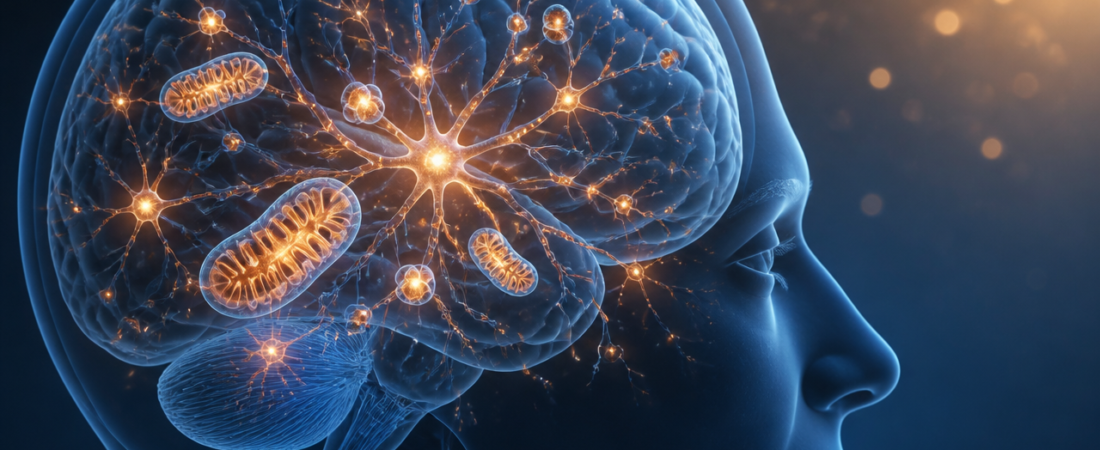
Mitochondrial Health & ATP – Fueling cellular brain energy. starts with a basic fact: thinking, remembering, moving, and regulating emotions all require a steady supply of cellular energy. In the brain, that energy is largely delivered as ATP, a molecule made mainly by mitochondria. When that supply is strained, the result is not always obvious fatigue. It may show up as slower thinking, reduced mental endurance, or less resilience during illness, poor sleep, or intense stress.
Table Of Contents
• How Mitochondria Produce ATP In Brain Cells
• Why Brain Energy Can Affect Focus And Cognition
• Supporting Mitochondrial Function Without Falling For Hype
Key Takeaways
• ATP is the immediate energy currency of brain cells. Neurons use it to maintain electrical signals, recycle neurotransmitters, move materials within the cell, and restore ion balance after firing.
• Mitochondria supply most brain ATP through oxidative phosphorylation. This process depends on oxygen, fuel molecules, intact mitochondrial membranes, and a functioning electron transport chain.
• Brain energy is a team effort. Neurons have intense energy needs, while astrocytes and other glial cells help manage fuel delivery and local metabolic support.
• Mitochondrial dysfunction is relevant to several brain disorders, but the meaning differs by condition. Direct mitochondrial diseases have a clearer causal connection than broad claims made about everyday brain fog or aging.
• The strongest foundations are not exotic supplements. Regular movement, sufficient sleep, adequate nutrition, cardiometabolic health, and avoiding repeated energy stressors are the most reasonable starting points.
A practical rule: Feeling more alert does not prove that brain ATP increased. Subjective energy, stimulant effects, better sleep, improved mood, and cellular bioenergetics can overlap, but they are not the same outcome.
How Mitochondria Produce ATP In Brain Cells
Mitochondria are organelles that convert energy from food into ATP through a coordinated set of reactions. In brain tissue, oxidative phosphorylation is the dominant ATP producing pathway. A broad review of mitochondria in brain disease explains that these organelles generate ATP through oxidative phosphorylation and are implicated in a wide range of brain disorders.
This is more than a textbook detail. A neuron cannot simply pause its energy needs while waiting for more fuel. Its membrane must keep specific amounts of sodium, potassium, calcium, and other ions on each side. Every electrical signal disrupts that balance. ATP powered pumps then restore it.
The Energy Pathway, Step By Step
The process begins when carbohydrates, fats, and in some circumstances amino acids are broken down into usable fuel. Glucose is especially important to the brain under ordinary conditions.
- Glycolysis breaks glucose into smaller molecules in the cell fluid outside the mitochondria. It produces a small amount of ATP quickly.
- The TCA cycle, also called the Krebs cycle, processes fuel fragments inside mitochondria and generates electron carrying molecules.
- The electron transport chain uses those electrons to move protons across the inner mitochondrial membrane.
- ATP synthase uses the resulting proton gradient to combine ADP and phosphate into ATP.
More than 90% of brain ATP is generated in mitochondria through oxidative phosphorylation, while aerobic glycolysis contributes additional energy and metabolic building blocks, as summarized in this review of brain energy rescue mechanisms. That percentage is useful, but it should not be treated as a fixed number for every cell, region, or moment. Energy use shifts with neural activity, oxygen availability, age, disease, and experimental conditions.
Neurons Need Help From Glial Cells
It is tempting to picture each neuron as an isolated power user with its own fuel supply. The real system is more cooperative. Astrocytes, a major type of glial cell, help regulate the environment around neurons and participate in brain energy metabolism.
Astrocytes can take up glucose from the bloodstream, store some energy as glycogen, and support neurons with metabolic substrates. This does not mean neurons are passive. Neurons have extensive mitochondrial networks and substantial direct energy needs. It means the brain’s fuel economy is shared.
Consider a busy city block during rush hour. Neurons are the buildings using large amounts of electricity. Astrocytes are part power grid, part maintenance crew, and part traffic control system. If the grid is under strain, adding more demand to one building is not the only concern. Distribution, storage, oxygen supply, and waste handling also matter.
Synapses Are Local Energy Bottlenecks
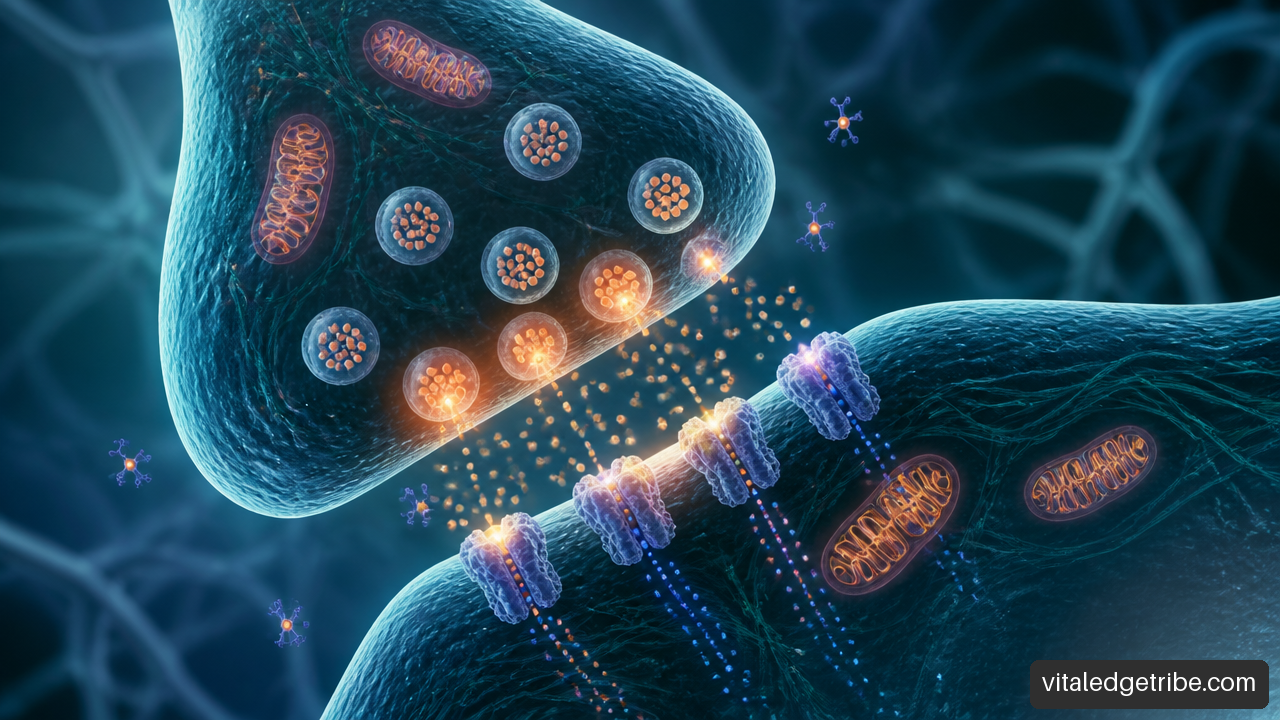
A synapse is the small junction where one neuron communicates with another. It is one of the most energy demanding sites in the nervous system because it must repeatedly release neurotransmitters, retrieve membrane material, reset ion gradients, and respond to incoming signals.
At the presynaptic side, ATP supports vesicle loading, movement, release, and recycling. At the postsynaptic side, ATP helps power ion pumps that restore electrical balance after receptors open. Mitochondria positioned near these high demand areas can provide local energy and help buffer calcium.
Calcium buffering is especially important. Calcium is a normal signaling molecule, but excessive calcium inside a cell can become harmful. Mitochondria can temporarily take up calcium, helping shape signals. Under severe stress, though, calcium overload can impair mitochondrial function rather than protect it.
Why Brain Energy Can Affect Focus And Cognition
The brain uses a large share of the body’s total energy despite representing a small share of body mass. Much of that energy does not go toward dramatic mental tasks such as solving a difficult problem. It goes toward the constant background work of maintaining cells, signaling networks, circulation, and chemical balance.
What Changes When Energy Production Falls Short
An ATP shortfall is rarely a simple on or off event. Cells often compensate at first by changing fuel use, reducing expensive activities, or relying more heavily on neighboring support systems. Trouble emerges when demand remains high or the compensation fails.
Possible effects can include:
• Less efficient membrane repolarization after neural firing
• Greater difficulty maintaining neurotransmitter cycling
• Reduced ability to manage calcium and oxidative stress
• Slower repair, transport, and recycling inside neurons
• Lower tolerance for metabolic challenges such as sleep loss, infection, or poor blood flow
These mechanisms can plausibly affect attention, memory, processing speed, and mental stamina. Still, everyday symptoms such as brain fog are nonspecific. They can also stem from sleep disruption, depression, anxiety, anemia, medication effects, thyroid conditions, nutrient deficiencies, pain, or many other causes. We should not assume mitochondria are the explanation without context.
A 2025 study on mitochondrial energy capacity and brain activation found that mitochondrial energy transformation capacity influenced activation patterns during sensory, affective, and cognitive tasks. The findings suggest that under limited resources, the brain may handle energy demanding cognitive processing differently from other kinds of processing. This is intriguing, but it is not a diagnostic test for low ATP in daily life.
Mitochondria And Neurological Disease: Strong Links Versus Broad Associations
Mitochondria matter across many neurological conditions, but the strength of evidence is not identical in each case.
| Evidence Context | What Mitochondria May Contribute | What We Can And Cannot Conclude |
|---|---|---|
| Primary mitochondrial disorders | Direct problems in energy production, often involving mitochondrial or nuclear genes | Mitochondrial dysfunction can be central to the disease process |
| Stroke and traumatic brain injury | Energy failure, oxygen disruption, calcium overload, and oxidative stress | Mitochondrial injury is an important part of acute damage, but treatment remains complex |
| Parkinson’s, Alzheimer’s, ALS, Huntington’s disease | Changes in respiration, dynamics, quality control, and oxidative stress are reported | Mitochondrial dysfunction is strongly involved, but it is not the only cause or treatment target |
| Psychiatric symptoms and everyday cognitive fatigue | Altered metabolism may be relevant in some people | Associations do not prove that a mitochondrial supplement will improve symptoms |
The distinction matters. A mechanism can be biologically real without becoming a useful consumer intervention. For example, reduced mitochondrial membrane potential in a laboratory model does not automatically mean a product can restore cognition in people.
Quality Control Matters As Much As Output
“Mitochondrial health” is not only about making more ATP. It also involves maintaining a healthy population of mitochondria.
• Biogenesis is the formation of new mitochondria.
• Mitophagy is the selective removal of damaged mitochondria.
• Fission divides mitochondria and can help isolate damaged sections.
• Fusion allows mitochondria to share contents and may support function under certain conditions.
These processes operate as quality control. A cell full of damaged mitochondria may not benefit simply from pushing them to work harder. In some settings, stress reduction, improved circulation, physical activity, or medical treatment of an underlying condition may matter more than trying to force energy output with a supplement.
Supporting Mitochondrial Function Without Falling For Hype
The most credible approach is to improve the conditions mitochondria need to do their job. We recommend starting with high impact basics before spending money on products marketed for “cellular energy.”
Build The Foundation First
| Strategy | Why It May Matter For Brain Energy | When It Is Most Useful | When To Be Careful |
|---|---|---|---|
| Regular aerobic and resistance exercise | Supports cardiovascular fitness, glucose regulation, and signals linked with mitochondrial adaptation | For most adults able to exercise safely | Seek clinical guidance after major illness, injury, chest pain, or unexplained exercise intolerance |
| Consistent sleep | Sleep disruption can impair metabolic regulation and leave the brain with less recovery capacity | When fatigue and focus problems track with short or irregular sleep | Persistent snoring, gasping, or severe daytime sleepiness may need medical evaluation |
| Adequate food intake and protein | Provides energy and amino acids needed for normal metabolism and repair | During high activity, aging, or recovery from under eating | Extreme restriction can worsen fatigue and training recovery |
| Cardiometabolic care | Blood pressure, blood sugar, lipids, and vascular health influence nutrient and oxygen delivery | For people with insulin resistance or cardiovascular risk factors | Do not self manage prescribed medications based on wellness advice |
| Alcohol and toxin reduction | Excess alcohol and certain exposures can disrupt sleep, nutrient status, and cellular metabolism | When intake is frequent or heavy | Withdrawal from heavy alcohol use can be dangerous without medical support |
Exercise deserves special attention because it affects multiple parts of the system at once. It raises energy demand temporarily, then can stimulate adaptations that improve metabolic capacity over time. Both aerobic work and resistance training can be useful. The best choice is the one you can repeat consistently.
For a beginner, that might mean brisk walking for 20 to 30 minutes several days per week plus two brief strength sessions. For a trained person, the limiting factor may be recovery rather than motivation. Adding more high intensity work to chronic poor sleep is not always a mitochondrial upgrade. It can be another stressor.
Nutrients: Necessary Does Not Mean Extra Is Better
Several nutrients participate in energy metabolism, including B vitamins, iron, magnesium, protein derived amino acids, and essential fatty acids. A deficiency can impair normal function. Correcting a documented deficiency is different from taking high doses in the hope of exceeding normal physiology.
Coenzyme Q10, creatine, alpha lipoic acid, carnitine, NAD related products, and antioxidant blends are often marketed for mitochondrial support. Their evidence varies by product, dose, medical condition, and outcome measured.
Creatine is a useful example. It helps buffer cellular energy through the phosphocreatine system and has established roles in muscle performance. Whether it reliably improves cognition or brain energy in healthy, well rested adults is less certain. It may be more relevant when energy demand is high, dietary creatine intake is low, sleep is restricted, or a specific clinical context is being studied. That is a narrower claim than “creatine boosts brain ATP for everyone.”
Antioxidants require similar caution. Mitochondria produce reactive oxygen species as part of normal metabolism. Excessive oxidative stress can be damaging, but completely suppressing signaling is not necessarily desirable. Large antioxidant doses have not consistently delivered broad performance or longevity benefits in humans. Food rich in colorful plants is a reasonable default; high dose products deserve more scrutiny.
How To Judge A Mitochondrial Claim
Before buying a product or pursuing a wellness therapy, we suggest using four questions:
- What outcome was actually measured? Look for cognition tests, exercise capacity, symptom scores, imaging, or validated biomarkers rather than vague “cellular energy” language.
- Who was studied? Results in people with a genetic mitochondrial disorder, older adults, athletes, or sleep deprived participants may not apply to everyone.
- Was the effect clinically meaningful? A statistically significant change may still be too small to notice in real life.
- What is the likely limiting factor? If poor sleep, depression, anemia, medication side effects, or untreated sleep apnea are driving fatigue, a mitochondrial supplement may miss the problem.
Fair warning: oral ATP products should not be confused with directly increasing ATP inside brain cells. ATP is tightly controlled within cells and does not simply travel intact from a capsule into neurons as usable brain energy. Claims should show how the intervention affected a meaningful human outcome, not only a cell culture experiment or a marketing diagram.
Frequently Asked Questions
What Do Mitochondria Do In Brain Cells?
Mitochondria produce most of the ATP brain cells use for electrical signaling, ion pumping, neurotransmitter handling, internal transport, and repair. They also help regulate calcium and redox balance. In neurons, where signaling can change rapidly, having mitochondria in the right location can matter as much as total mitochondrial quantity.
How Is ATP Made In Neurons?
Neurons use glucose and other fuel sources to generate ATP. Glycolysis produces a small amount of ATP outside mitochondria. Most ATP then comes from mitochondrial oxidative phosphorylation, where the electron transport chain creates a proton gradient that ATP synthase uses to make ATP.
Why Does The Brain Need So Much Energy?
The brain is active even at rest. Neurons must constantly maintain ion gradients across their membranes, and those gradients are repeatedly disturbed when cells communicate. Synapses also consume energy to release and recycle neurotransmitters. The cost is continuous, not limited to periods of intense concentration.
Can Mitochondrial Dysfunction Affect Memory Or Cognition?
It can. If cells cannot meet energy needs, processes involved in signaling, synaptic maintenance, calcium regulation, and repair may be affected. But memory problems have many possible causes. A person with new, progressive, or functionally disruptive cognitive changes should seek clinical evaluation instead of assuming the issue is low mitochondrial energy.
Can Exercise Improve Mitochondrial Health In The Brain?
Exercise can support systems that matter for brain energy, including circulation, insulin sensitivity, cardiorespiratory fitness, and metabolic adaptation. Human studies do not allow us to promise a specific increase in brain mitochondrial number from any one workout plan. Still, regular activity is among the most practical evidence aligned strategies for whole body metabolic health.
Do Antioxidants Improve Mitochondrial Function?
Not reliably for everyone. Antioxidants may be helpful in specific deficiency states or clinical contexts, but high dose supplementation has mixed evidence and may not translate into better brain function. A diet containing fruits, vegetables, legumes, nuts, and other minimally processed foods is usually a more defensible baseline.
What Is Mitophagy And Why Does It Matter?
Mitophagy is the process by which cells identify and remove damaged mitochondria. It helps prevent poorly functioning mitochondria from accumulating. Along with mitochondrial fission, fusion, and biogenesis, mitophagy is part of the maintenance system that helps cells balance energy output with quality control.
What Are Signs Of Low Cellular Energy In The Brain?
There is no simple symptom checklist that can diagnose low brain ATP. Fatigue, poor focus, reduced exercise tolerance, headaches, and brain fog are common but nonspecific. If symptoms are persistent, severe, new, or paired with weakness, fainting, seizures, major memory change, or neurological symptoms, medical assessment is more appropriate than self treating with supplements.
Sources And References
• PMC — Mitochondria and Brain Disease: A Comprehensive Review: https://pmc.ncbi.nlm.nih.gov/articles/PMC10526226/
• PMC — Brain energy rescue: an emerging therapeutic concept: https://pmc.ncbi.nlm.nih.gov/articles/PMC7948516/
• PMC — Mitochondrial Energy Transformation Capacity Influences Brain Activation During Sensory, Affective, and Cognitive Tasks: https://pmc.ncbi.nlm.nih.gov/articles/PMC12236849/