
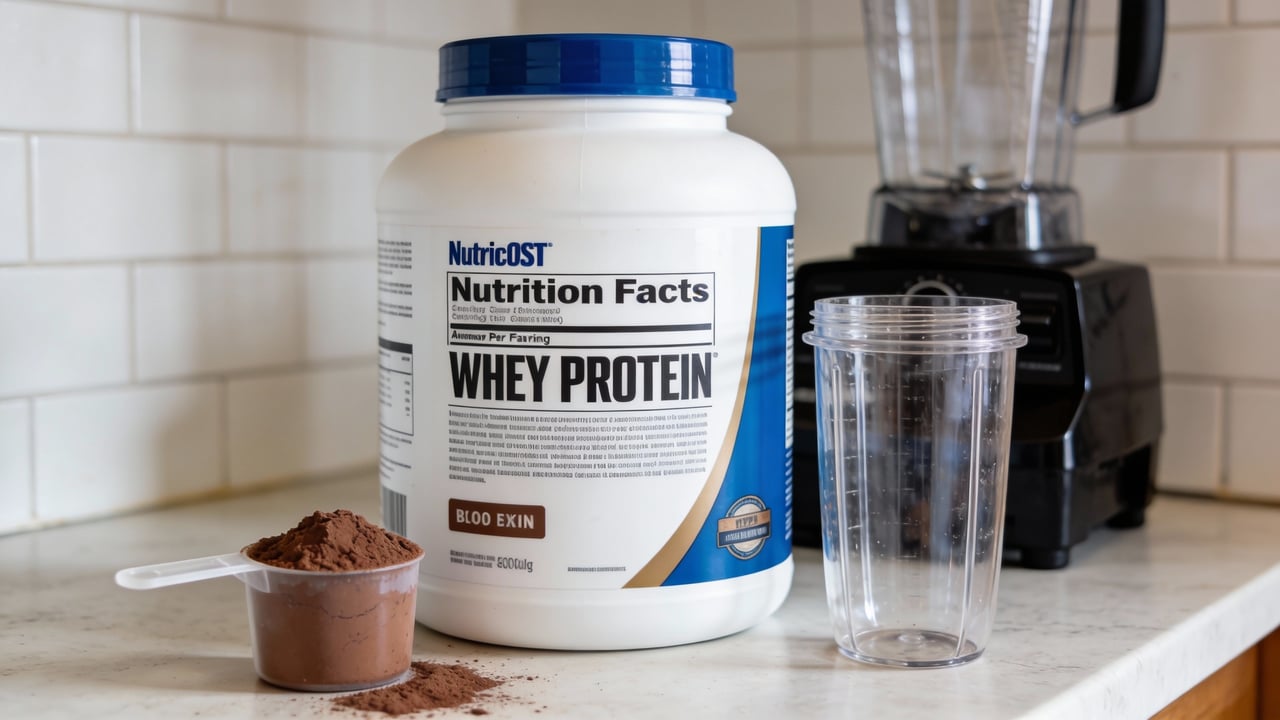



You open a 5-pound canister expecting the usual sugar-laced sludge — but this time it's different. Nutricost's unflavored Whey Protein Concentrate reads like a short grocery list: whey protein concentrate and sunflower lecithin. I once stirred a scoop into a savory tomato soup (don’t judge) and was surprised at how seamlessly it disappeared into the background. This outline guides you through real-world pros and cons, practical usage tips, price breakdowns, and a side-by-side look at micronutrient needs for vegans vs omnivores.
Quick Snapshot — What You Get (Pros and Cons)
If you want a clean straightforward supplement that’s easy to use daily, Nutricost Whey Protein (especially the Unflavored version available in the 5 lb canister) keeps things simple: whey protein concentrate + sunflower lecithin. It contains MILK, and the unflavored option has no artificial sweeteners or added sugars.
At-a-Glance Basics
| What you get | Details |
|---|---|
| Protein per serving | 25 g (46% DV, label claim) |
| Servings per 5 lb | 69 servings |
| Diet notes | Gluten-free, Non-GMO |
| Manufacturing | NSF Certified, GMP compliant, FDA registered facility |
| Price examples (Amazon) | $47.95 one-time ($0.60/oz); $43.15 subscribe ($0.54/oz); deals as low as $0.51/oz |
Pros
- Simple ingredient list in the unflavored tub: whey protein concentrate + sunflower lecithin.
- Flexible taste control: you can go sweet (smoothies, shakes) or savory (soups, sauces). Many users notice a mild vanilla-like note even though it’s unflavored.
- Strong value for size: 69 servings in a 5 lb canister, often cheaper with Subscribe & Save.
- Mixes easily with water or milk; many reviewers report smooth blending with minimal clumps.
Cons
- Contains milk, so it won’t work for dairy allergies and may bother some sensitive stomachs.
- Some mixes can turn foamy or slightly grainy, depending on your liquid and shaking method.
- Flavored versions may use sucralose, which some people prefer to avoid.
- It’s sold by weight, not volume—settling can make the tub look less full.
Use and storage notes: store in a cool, dry place, and don’t use it if the safety seal is broken.
Pros and Cons Details — Is Nutricost Worth It?
Pros: Cost Effective Pricing without cutting macros
If you want Cost Effective Pricing, Nutricost is hard to ignore. On Amazon, the 5 lb tub typically lands around $0.51–$0.60/oz depending on subscription, and it often undercuts big names like Optimum Nutrition, Isopure, NAKED Whey, BulkSupplements.com, and Body Fortress while keeping similar protein macros.
You also get a practical 5-pound size (about 69 servings), and many buyers say they keep coming back for the larger canister because it saves money and reduces plastic waste.
Pros: Minimal additives + flexible unflavored option
The unflavored whey keeps things simple: whey protein concentrate + sunflower lecithin (contains milk). There are no added sugars or unnecessary fillers, and the unflavored option helps you avoid artificial sweeteners entirely. Many users even notice a light vanilla-like note, which makes it easy to mix into smoothies, baking, or savory recipes without taking over the taste.
Pros: Reliable protein + Great Taste Reviews
- 25 g protein per serving (a complete protein with essential amino acids)
- Mixes easily for most people, even with a spoon
- Great Taste Reviews are common on flavored options (like Chocolate or Choc Peanut Butter), with an example macro of 25 g protein for 140 calories
Amazon rating: 4.5 out of 5 stars across 10,079+ ratings, with many repeat purchases.
Cons: Artificial sweeteners sucralose in flavored tubs
If you choose flavored versions, check the label—many include Artificial sweeteners sucralose, and sweetness levels can feel “too much” for some.
Cons: Texture, digestion, and label warnings
- Some mixes turn foamy or slightly grainy
- A small group reports gassiness or sensitivity (sometimes linked to lecithin or sweeteners)
- California Proposition 65 warning applies (chemicals including Lead); always review the current label since formulas can change
Effectiveness and Macros — Muscle Protein, BCAAs & Mixability
Protein per serving: built for muscle protein synthesis
With Nutricost Whey Protein Concentrate, you get 25 g protein per serving, which is a strong dose for supporting muscle protein synthesis after training. Because whey is a complete protein, each scoop delivers all essential amino acids required by U.S. labeling standards—so you’re not “missing” key building blocks for recovery.
You also benefit from naturally occurring BCAA amino acids (including leucine), which are closely tied to workout recovery and muscle repair. If you’re trying to hit a daily protein goal without extra additives, the unflavored formula keeps it simple: whey protein concentrate plus sunflower lecithin.
Effectiveness and Macros: what you’re really getting
Macros can vary slightly by batch and flavor, but the profile is typically lean for a concentrate. Some source findings report a high protein percentage per scoop (up to ~92%) for certain formulations, placing it among more concentrated whey powders.
| Macro (typical) | What to expect |
|---|---|
| Protein | 25 g per scoop |
| Fat | ~3 g |
| Carbs | ~1–3 g |
Flavored options can run higher in calories and carbs. For example, the Choc Peanut Butter flavor is often listed around 140 calories for 25 g protein, so check the label if you track macros closely.
Mixes well blender: texture and dissolving
In most cases, it mixes well in water or milk and can dissolve with just a spoon. If you notice slight foam or graininess, a shaker bottle helps—but it mixes well blender best, especially in smoothies, baking, or thicker recipes where texture matters.
Taste, Digestibility & Practical Use (Real-World Tips)
Good Flavors Available: unflavored versatility + flavored variety
If you choose the unflavored 5-lb canister, you get a simple base (whey protein concentrate + sunflower lecithin, contains milk) with no added sugar or artificial sweeteners. Many users still notice a faint vanilla undertone, which makes it easy to use in both sweet and savory recipes without taking over the taste.
- Smoothies and milkshakes (fruit, cocoa, peanut butter)
- Oatmeal, yogurt, pancakes, and baking
- Soups, mashed potatoes, or savory sauces (start small and taste as you go)
If you want more “ready-to-drink” flavor, Good Flavors Available include Chocolate, Vanilla, Shaq’s Double Double Choc, and Choc Peanut Butter. Reviews often praise taste and mixability, but sweetness is personal—and flavored tubs usually add sweeteners and can bump calories and carbs (some flavors land around 140–160 calories per serving; a cookies & cream-style profile can be 160 kcal with 5g carbs).
Mixes Well Performance: how to avoid clumps, foam, or graininess
For best Mixes Well Performance, use 1 scoop (~1/3 cup) with 6–10 oz of water or milk. It typically dissolves well even with a spoon, though some people report occasional foamy or grainy texture.
- Shake hard for 15–20 seconds, then rest 30 seconds to reduce foam.
- Use a blender for thick recipes or when mixing into oats/batter.
- Add powder last to help it disperse faster.
Digestibility absorption quality & Good Ingredients Quality
Across thousands of ratings (about 4.5/5 from 10,079+ reviews), most users say it feels easy on the stomach, supporting solid Digestibility absorption quality. A smaller group reports gassiness or mild upset—often tied to personal sensitivity to sunflower lecithin or sweeteners in flavored versions. If you’re sensitive, start with half a scoop and check the current label for updates.
Buying Guide, Pricing & Sustainability — Subscribe, Save, Repeat
Cost effective pricing: one-time vs. Subscribe and save
If you want budget friendly protein without extra fillers, the unflavored 5 lb canister is the value pick. On Amazon, a one-time purchase is $47.95 (about $0.60/oz). Turn on Subscribe and save and the same tub can drop to $43.15 (about $0.54/oz), with some deals going as low as $0.51/oz. That lower cost per ounce usually means a lower cost per serving too, which is why many repeat buyers stick with subscriptions.
| Option | Price | Approx. cost/oz |
|---|---|---|
| One-time (5 lb) | $47.95 | $0.60/oz |
| Subscribe (example) | $43.15 | $0.54/oz |
| Subscribe (best deals) | Varies | As low as $0.51/oz |
Subscribe-and-save flexibility (set it and adjust anytime)
You can choose delivery every 2 weeks up to 6 months, with a 3-month schedule being common for a 69-serving tub. This helps you avoid running out while still matching your real usage. Amazon fulfillment adds convenience, and you’ll often see seller variety (including eSupplements) while still getting Amazon’s shipping and customer support.
- Adjust, skip, or cancel deliveries as your training or budget changes
- Watch for free-shipping thresholds and subscription discounts
- Amazon’s broader ecosystem can make reordering simpler in one cart
Sustainability notes + label checks
Buying the larger 5 lb canister can reduce packaging compared to smaller tubs, which many shoppers prefer for less plastic waste. Remember it’s sold by weight, not volume, so settling is normal. Store it in a cool, dry place, check the seal, and review the current label for formula updates and California Prop 65 guidance.
Customer reviews ratings (4.5/5 across 10,079+ ratings) often mention repeat purchases for value, convenience, and the larger size.
Wild Card: Vegan vs Omnivore Micronutrient Profiles & Supplementation
Micronutrient comparison: where whey fits
Nutricost Whey Protein Concentrate is a simple, complete protein (25g per serving) that works well in both vegan-adjacent and omnivore diets, but it doesn’t solve the biggest micronutrient gaps by itself. Your micronutrient comparison comes down to what your base diet provides—especially for B12, iron, and omega-3s.
B12 supplement: the non-negotiable for vegans
Most omnivores naturally hit the adult B12 RDA of 2.4 mcg/day from animal foods. If you eat fully vegan, you have virtually no reliable food sources, so a B12 supplement is strongly recommended. Common approaches include cyanocobalamin or methylcobalamin at 25–100 mcg daily or 1000 mcg weekly, though your needs can vary with labs, age, and absorption.
Iron absorption: non-heme strategy matters
Omnivores get heme iron from meat, which is easier to use. Vegans rely on non-heme iron, so you may need about 1.8x the usual intake (RDA examples: 8 mg/day men, 18 mg/day women). To improve iron absorption, pair beans, lentils, or spinach with vitamin C foods, and avoid coffee/tea or calcium at the same time as iron. If fatigue or heavy training is a factor, ask for ferritin testing; if you supplement, iron bisglycinate is often gentler.
Omega-3 algae supplement: EPA/DHA without fish
Fish provides EPA/DHA directly, while plant ALA converts poorly. If you’re vegan—or you rarely eat fish—an Omega-3 algae supplement is a practical fix. A common target is 250–500 mg/day combined EPA+DHA.
Bottom line: whey can help you hit protein goals cheaply and cleanly, but you still need a smart micronutrient plan—especially if you’re vegan.