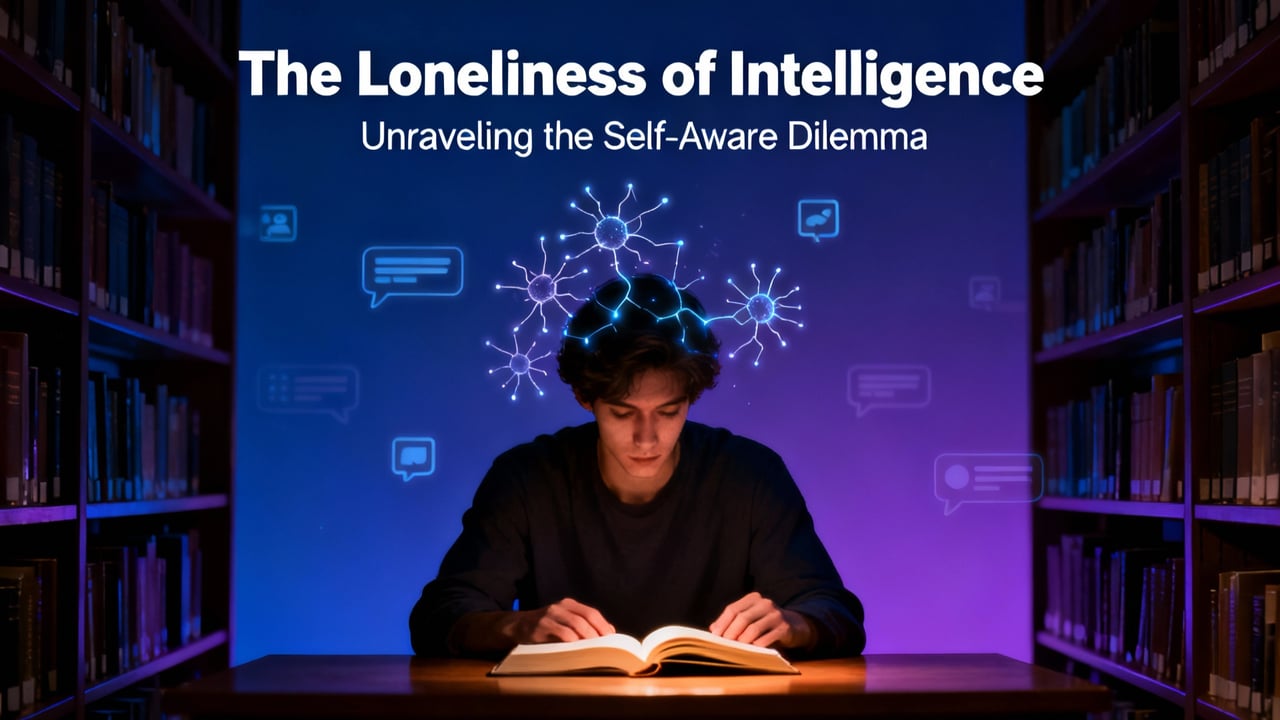

When I was 16, acing my classes but dreading the lunchroom, I found a curious solace in library corners and internet forums. Odd thing is, bright minds are supposed to have an easier time navigating the world, right? Yet, modern research — and my own experience — say otherwise. Intelligent people often feel isolated, with the ache of loneliness sometimes more familiar than celebration. Why does a quick wit correlate so often with solitude? Let’s unravel this knot, mistakes and messy feelings included.
When Brains Notice Everything: The Self-Aware Person’s Dilemma
One of the most challenging aspects of being highly intelligent is how much I notice—about myself, about others, about every tiny shift in a conversation. This heightened self-awareness is both a gift and a burden. For many intelligent people, loneliness isn’t just about being alone; it’s about feeling isolated even in a crowd, because our minds pick up on things others might miss. This constant awareness can make social rejection feel especially sharp, and it’s a key reason why intelligent people loneliness is such a common struggle.
When I talk with someone, my brain doesn’t just hear their words. It analyzes tone, body language, pauses, and even the subtlest facial expressions. If I sense a hint of disinterest or a slight change in mood, I start to wonder: Did I say something wrong? Was my joke off? Did I come across as arrogant? This is where high self-awareness overthinking comes into play. I don’t just move on from a conversation—I replay it, sometimes for hours, dissecting every detail for hidden slights or signs of rejection.
I remember once spending an entire evening replaying a two-minute chat I had with a colleague. I analyzed every word, every pause, convinced I’d said something to offend them. The reality? They probably didn’t even remember the conversation.
This kind of overthinking turns simple social interactions into mental chess matches. I’m not just responding; I’m anticipating, strategizing, and second-guessing. While this can make me a careful communicator, it also means I rarely feel at ease. The more I notice, the more I worry about being misunderstood or rejected. Research shows that smart, analytical individuals like me report significantly higher loneliness than the general population. The sting of subtle rejection is amplified by our tendency to notice and analyze everything.
Another layer to this dilemma is the empathy perception gap peers. Studies show that young adults, especially those who are highly self-aware, tend to underestimate how much their peers care about them. I often assume people are less empathetic or interested than they actually are, which makes me withdraw even more. This perception gap fuels isolation, as I hesitate to reach out or open up, fearing I’ll be met with indifference.
- Heightened self-awareness makes rejection feel more intense for intelligent people.
- Overthinking social cues leads to excessive replaying and analysis of interactions.
- The empathy perception gap causes us to assume others care less, increasing our sense of isolation.
Intelligence, with its gift of deep perception, often brings a painful level of introspection. I find myself caught between wanting connection and fearing rejection, noticing every nuance and wondering if I truly belong. This is the self-aware person’s dilemma: when your brain notices everything, even the smallest slight can feel enormous, and loneliness becomes not just a feeling, but a constant companion.
Solitude or Silo? The Fine Line Smart People Walk
For as long as I can remember, my best ideas have come to me in moments of quiet. Deep thinking demands alone-time. But I’ve learned that what starts as productive solitude can quietly slip into social isolation—especially in today’s world of remote work and digital communication. The line between healthy alone-time and emotional isolation is thinner than I ever expected.
When I’m immersed in a project, I often lose track of time and even my own needs. After a week of “flow,” it’s not unusual to realize my only real conversation was with the pizza delivery guy. This isn’t just my experience. Many knowledge workers find themselves in similar situations, where the drive for focus and achievement leads to unintentional loneliness. The risk is real: what starts as necessary solitude for intellectual pursuits can turn into a silo, cutting us off from meaningful human connection.
Remote Work: From Solitude to Social Isolation
Remote work has made it easier than ever to drift from productive solitude into lonely silence. Without the natural social cues of an office or campus, days can pass with little more than digital messages and brief video calls. The social isolation remote work can create isn’t always obvious at first. It sneaks up, disguised as efficiency or dedication.
For smart people, this is a double-edged sword. We need time alone to think deeply and solve complex problems. But without regular, genuine interaction, our mental health can suffer. The impact of loneliness mental health impact is well-documented, and it’s not limited to adults. In fact, recent data shows that 61% of US youth say loneliness takes a moderate or greater toll on their mental health. This is a clear sign that the problem is widespread and growing, especially in environments where digital communication replaces face-to-face connection.
Youth Mental Health and the Cost of Isolation
The mental toll of loneliness is especially high for young people. Many young, intelligent individuals are now working or studying remotely, often with little in-person interaction. The pressure to perform, combined with the lack of social support, can have a serious effect on youth mental health wellbeing. It’s easy to see how the pursuit of excellence can lead to emotional isolation, even when surrounded by digital “connections.”
“After a week of ‘flow’ on a project, I realized my only real conversation had been with a pizza delivery guy.”
That moment of realization is a wake-up call. It’s a reminder that while solitude is essential for deep work, it’s just as important to recognize when it starts to turn into isolation. The boundary is blurry, especially for those of us who thrive on intellectual engagement. In the digital era, it takes conscious effort to maintain real connections and protect our mental health from the subtle creep of loneliness.
The Internet Promised a Tribe — and Built a Fortress
When I first turned to the internet, I believed it would connect me with like-minded people. As someone who thinks deeply and questions everything, I hoped to find my tribe online. The promise was simple: the digital world would bring us together. But in reality, it often does the opposite, especially for those of us who crave meaningful connection.
Algorithmic Echo Chambers: Trapped in a Bubble
The internet is powered by algorithms designed to keep us engaged. These algorithms quickly learn our interests and feed us more of the same. For intelligent people, this can mean a steady stream of content that matches our preferences, but it also creates internet algorithmic echo chambers. Instead of connecting with diverse thinkers, I find myself surrounded by similar ideas, rarely challenged or inspired. It feels less like a community and more like a fortress, with walls built by code.
- Social media filters out opposing views, limiting real debate.
- Online forums often reward conformity over curiosity.
- Smart people may feel even more isolated when their unique perspectives aren’t valued.
The result is a digital loneliness that algorithms can’t fix. I can scroll for hours, but the sense of belonging I seek remains out of reach.
AI Chatbots: Companions or Illusions?
Lately, AI chatbots are being marketed as friends. They promise to listen, respond, and even offer advice. For those struggling to connect in real life, this can seem like a lifeline. But AI chatbots and human connection are not the same. The more I interact with a chatbot, the more I notice a subtle shift: I start relying on it for comfort, but the emptiness lingers.
Heavy AI chatbot users report greater loneliness and reduced real-world socializing.
These digital companions mimic empathy, but they can’t replace the warmth of a real conversation. Over time, dependence on chatbots can deepen isolation, especially for those already feeling alone. It’s easy to fall into the trap of thinking I’m connected, when in fact, I’m just talking to code.
Digital Loneliness: The Illusion of Connection
There’s a strange disconnect between our online and offline lives. My online persona might look lively and engaged, but in reality, I might still eat lunch alone. This is the heart of digital loneliness: the internet gives the illusion of connection, but not its substance. Data shows that young people, who spend more time online than ever, are reporting higher levels of loneliness, especially after the pandemic.
- Online relationships often lack depth and emotional resonance.
- Face-to-face interactions are declining, leaving many feeling more isolated.
The internet promised a tribe for people like me, but instead, it built a fortress—one that’s hard to escape, no matter how smart or curious you are.
Correcting the Great Empathy Error (a Tangent with Hope)
One of the most surprising things I’ve learned from loneliness research, especially the 2025 data, is how much of our isolation comes from what experts call the empathy perception gap peers. Many intelligent people, myself included, tend to assume that others don’t understand or care as deeply as we do. We think our feelings are too complex, or that our peers are less empathetic than we are. But this belief is often just plain wrong.
I remember a time when I tried to open up to a group of friends, telling them I felt left out and disconnected. I was nervous, expecting blank stares or awkward silence. Instead, something unexpected happened: one by one, they admitted they’d felt the same way. We were all carrying the same unspoken loneliness, each of us convinced we were alone in it. That moment taught me how powerful emotional self-disclosure well-being can be—not just for me, but for everyone involved.
Recent studies show that correcting misperceptions about peer empathy is a scalable intervention against loneliness. When people realize their peers are more empathetic than they assumed, it disrupts the negative cycle of withdrawal. This is especially true for those of us who tend to overthink or analyze social situations. The empathy perception gap peers experience isn’t just a minor misunderstanding—it’s a major barrier to connection. When we believe others won’t understand, we pull back, making it even less likely we’ll find the empathy we crave.
The good news is that simple interventions can make a big difference. Research suggests that even brief exercises—like reading stories about others’ hidden struggles, or sharing our own feelings in a safe space—can help correct the empathy perception gap. When we see evidence that others are just as vulnerable as we are, we’re more likely to reach out, and more likely to receive support in return. Admitting vulnerability is hard, but it often brings unexpected reciprocity.
Changing false beliefs about low peer empathy has been proven to encourage real social connection. The 2025 loneliness research data shows that when people are given accurate information about how much their peers care, their sense of isolation drops. This isn’t just wishful thinking—it’s a practical, evidence-based approach to reducing loneliness among intelligent people.
In the end, correcting the great empathy error is about more than just feeling better. It’s about breaking the cycle of loneliness and building authentic connections. If you, like me, have ever felt alone in your thoughts, remember: your peers are probably more empathetic than you think. Sometimes, all it takes is a little courage to share how you feel—and a willingness to believe that others might just feel the same way.