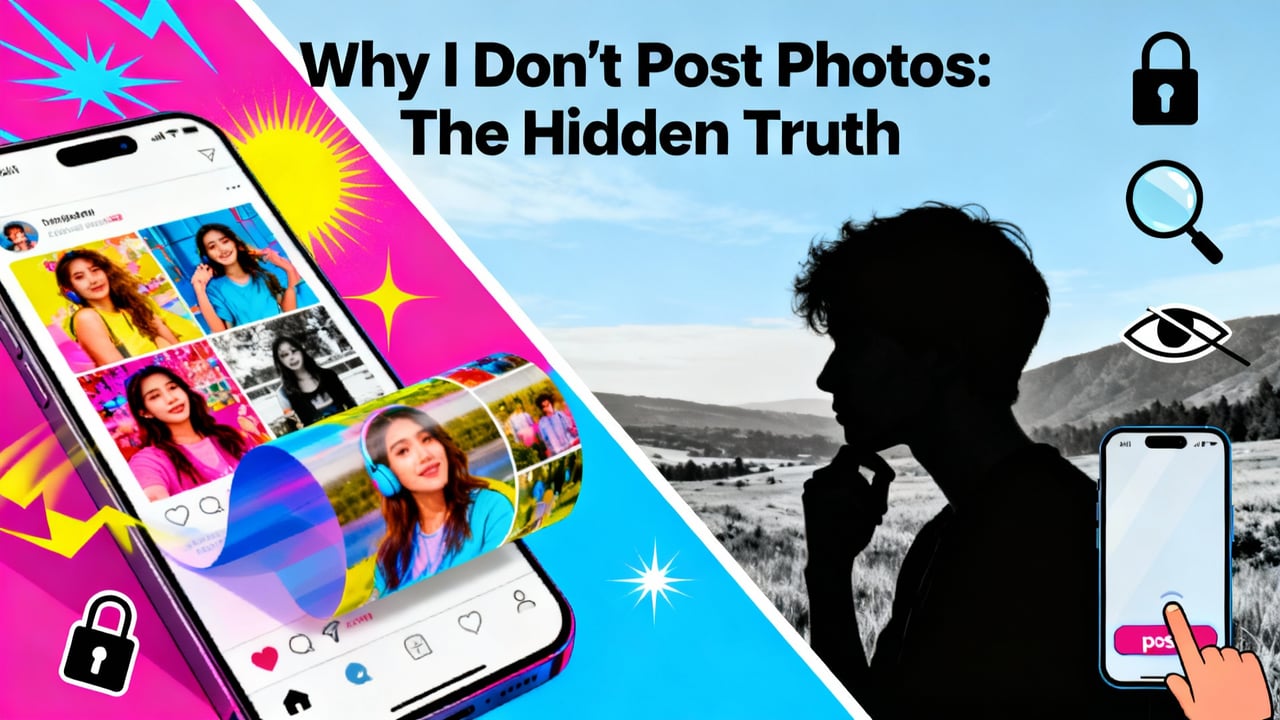

Let me tell you a little something odd: despite running a blog and being glued to my phone (like, way too much), I've never once posted a selfie. Not even on my birthday. It's not that I'm hiding, but whenever my thumb hovers over the 'upload' button, something in my gut says, "nah, not today." If you've ever wondered what makes some people skip sharing their faces online, buckle in — we're about to explore the real stories, weird anxieties, and hidden strengths behind the silent members of your feed.
Craving Privacy in a Hyper-Public World
Imagine scrolling through your feed and seeing a never-ending stream of selfies, vacation snapshots, and carefully curated moments. For many, this is the new normal. But if you’re someone who hesitates to post your own photos, you know there’s another side to the story—one where social media privacy concerns take center stage, and sharing your face online feels less like fun and more like exposure.
Not everyone wants to trade their personal moments for digital applause. In fact, for some, the idea of putting their life on display for likes and comments is deeply uncomfortable. You might recognize yourself in this: you value your privacy, and you’re not interested in performing for an audience, even a virtual one. This isn’t just about shyness or insecurity. It’s about a strong, almost instinctive need to protect your inner world from the gaze of strangers—and sometimes, even friends.
The Fierce Instincts of Social Media Non-Posters
Among social media non-posters, privacy isn’t just a preference—it’s a defining trait. Maybe you’ve noticed how you hesitate before uploading a group photo, or how you feel uneasy when someone tags you in a candid shot. These are privacy instincts non-posters know well. They’re not just about avoiding embarrassment; they’re about maintaining control over your own narrative.
Some people are fiercely protective of their privacy, even with close friends online. You might have a tight-knit group chat, but when it comes to your public profile, it’s a blank slate. One friend once joked,
“My Instagram is a locked safe — you’ll only see my brunch, not my face!”For you, sharing photos can feel like opening the door to unwanted opinions, judgments, or even misunderstandings. There’s a comfort in knowing that your life isn’t up for public debate.
Psychological Traits of Non-Posters
What drives this desire for privacy? Research suggests that psychological traits non-posters share often include reflective thinking and a strong sense of independence. You might find yourself questioning why people need to see every detail of your life. You’re not looking for validation from likes or comments. Instead, you’re content with your own approval, and you prefer to share meaningful moments in person or in private messages.
- Reflective Thinking: You consider the impact of sharing before you post, weighing the risks and benefits.
- Independence from Social Validation: You don’t need external approval to feel good about yourself.
- Value for Autonomy: You want to control who sees your images and how they’re used.
The Safety of Staying Off the Grid
There’s a unique sense of safety in keeping your life off the grid. When you don’t post photos, you’re less likely to attract unwanted attention or criticism. You avoid the pressure to present a perfect image or to keep up with the latest trends. For you, privacy is a form of self-care—a way to protect your mental space from the noise of the online world.
Ironically, opting out of photo sharing sometimes makes you even more interesting. People wonder what you’re up to, and your absence from the digital stage creates a sense of mystery. In a world where oversharing is common, your restraint stands out. You become the friend who’s always present in real life, but who keeps their online persona minimal and enigmatic.
Social Media Privacy Concerns and Self-Image
For many non-posters, social media privacy concerns are closely tied to self-image. You might worry about how a photo will be perceived, or you may simply dislike the idea of being judged based on appearances. The reluctance to share isn’t always about hiding; sometimes, it’s about refusing to let others define you by a single snapshot.
In the end, your choice not to post photos is a reflection of your values. You prioritize real connections over virtual ones, and you trust your instincts to guide you in a hyper-public world. While others chase digital applause, you find contentment in the quiet comfort of privacy.
Performance Anxiety and the Myth of Effortless Sharing
You’ve seen it a thousand times: someone posts a selfie, a vacation snapshot, or a candid moment, and it looks so easy. The likes roll in, comments pile up, and it seems like sharing your life online is as natural as breathing. But for many people, stepping into the digital spotlight is anything but effortless. If you’ve ever hovered over the “post” button, heart pounding, second-guessing every detail, you’re not alone. Social media performance anxiety is a real and common experience, especially among those who rarely share their photos online.
Freezing at the Post Button: When Sharing Isn’t Simple
Imagine this: you’ve picked out a photo you actually like. You’ve cropped, filtered, and maybe even run it through a quick edit. But as your finger hovers over the “share” button, your mind floods with questions. Is this photo good enough? Will people judge me? What if no one likes it? Suddenly, posting a simple picture feels like stepping onto a stage with a spotlight glaring down on you.
This moment of hesitation is the heart of social media performance anxiety. It’s the pressure that comes from knowing your photo isn’t just for you—it’s for everyone who follows you, and maybe even for strangers. The act of sharing becomes a performance, and not everyone wants to be the star of the show.
The Weight of Self-Presentational Pressure
Self-presentational pressure is the invisible force that makes you question how you appear to others online. Social media platforms are designed for attention, but not everyone thrives on it. Some people love the spotlight, but others find it overwhelming. For many, the idea of being seen, judged, or even ignored can be paralyzing.
You might find yourself obsessing over every detail—your smile, your hair, the background, the caption. Maybe you remember that time you stared at your own nose for too long on a Zoom call, suddenly noticing every flaw. Social media can magnify these everyday insecurities, turning a simple photo into a source of stress.
“I deleted the same photo seven times before I finally gave up and went for a walk,” a friend once confessed. “I just couldn’t stop thinking about what people would say—or if they’d say anything at all.”
This kind of digital anxiety is more common than you might think. The fear of judgment, criticism, or even silence can be enough to keep your photos safely tucked away in your camera roll.
Reasons for Not Sharing Photos: Beyond the Surface
- Fear of Judgment: Worrying about how others will perceive your appearance, your choices, or your life can make sharing feel risky.
- Privacy Concerns: Not everyone wants their face or personal moments floating around the internet, accessible to anyone at any time.
- Social Comparison Fatigue: Scrolling through endless highlight reels can leave you feeling like you don’t measure up, so why add to the pile?
- Performance Pressure: The expectation to get likes, comments, or approval can turn sharing into a high-stakes game.
For some, the anxiety of waiting for “likes” and “comments” outweighs any thrill that comes from sharing. You might find yourself checking your phone every few minutes, wondering if anyone has noticed your post. Or maybe you delete it altogether, deciding it’s not worth the stress.
The Myth of Effortless Sharing
It’s easy to believe that sharing photos online is simple for everyone else. But the truth is, many people struggle with the same doubts and worries. The polished feeds you see are often the result of careful curation, multiple takes, and, yes, a lot of anxiety behind the scenes. The myth of effortless sharing hides the reality of self-presentational pressure and the very real social media performance anxiety that keeps many people from posting their photos at all.
So, if you find yourself freezing at the post button, know that you’re not alone. The reasons for not sharing photos are deeply personal, and your experience is more common than you might think.
Authenticity Over Applause: The Power of Quiet Self-Esteem
Imagine this: You’re standing on a hilltop, the sun dipping below the horizon, painting the sky in colors you can’t quite name. Your phone is in your pocket, but you don’t feel the urge to pull it out. There’s no need to capture the moment for your followers, no pressure to find the perfect filter, no thought of hashtags or likes. This moment is just for you. If you recognize yourself in this scene, you might be one of the many authenticity social media non-posters—people who choose to live their experiences rather than broadcast them.
For some, the world of social media is a stage, and every post is a performance. But for others, the applause of digital validation doesn’t hold much appeal. You might notice that you rarely, if ever, post photos of yourself online. Maybe you’ve wondered why. The answer often lies in the personality traits of non-posting individuals: a unique blend of self-awareness, authenticity, and a lower motivation for social validation.
Choosing Real Over Recognition
You may have friends who can’t resist sharing every meal, every outing, every achievement. Their feeds are full of carefully curated snapshots, each one a bid for attention and approval. But you? You find more meaning in the moment itself. For you, offline bonds sometimes matter more than virtual applause. You value the laughter shared across a dinner table, the quiet comfort of a friend’s presence, the thrill of an adventure that belongs only to those who were there.
This isn’t about shyness or a lack of confidence. In fact, research suggests that authenticity social media non-posters often display a strong, quiet self-esteem. You’re not driven by the need for external validation. Instead, your sense of self-worth comes from within. You know who you are, and you don’t need a stream of likes or comments to confirm it.
The Freedom of Undocumented Moments
There’s a special kind of freedom in enjoying an experience without feeling the urge to document it. When you’re not thinking about how something will look online, you can be fully present. You notice the little details—the way the wind feels, the sound of laughter, the taste of your coffee. You’re not distracted by thoughts of captions or engagement rates.
A friend once told me,
“The only person I want to impress is the one in my mirror.”That simple truth captures the heart of quiet self-esteem. When you live authentically, you’re not performing for an audience. You’re living for yourself, guided by your own values and desires.
Digital Validation and Self-Esteem: Not Always Linked
It’s easy to assume that a lack of online presence means a lack of confidence. But in reality, digital validation and self-esteem don’t always go hand in hand. Many non-posters have a deep sense of self-assurance. They don’t need to announce their happiness, beauty, or success to the world. Their confidence is quiet, but it’s real.
- Lower motivation for digital applause: You’re not interested in chasing likes or followers.
- Higher self-awareness: You understand your own feelings and motivations, and you’re comfortable with who you are.
- Preference for authentic offline connections: You value real conversations and shared experiences over online interactions.
If you’re someone who rarely posts photos of yourself, you might recognize these traits in yourself. You know that your worth isn’t measured by your online presence. You find joy in moments that are yours alone, and you trust that the people who matter will see you for who you really are—no filter needed.
Avoiding Comparison Traps — and Why That’s Genius
Let’s be honest: social media can feel like a never-ending parade of perfect selfies, vacation snaps, and “candid” moments that somehow look straight out of a magazine. If you’ve ever scrolled through your feed and felt a twinge of envy, you’re not alone. The truth is, active posters often find themselves caught in a loop of social comparison—what I like to call the envy spiral. But here’s where things get interesting: people who don’t post their photos on social media are quietly sidestepping this exhausting game. And that’s not just smart—it’s genius.
Social Comparison Fatigue: The Hidden Cost of Posting
Every time you upload a photo, there’s this unspoken question: How will people react? Will they like it? Will they comment? Will they notice if you don’t get as many likes as last time? This cycle creates what psychologists call social comparison fatigue. You start measuring your worth against the highlight reels of others, and it’s easy to slip into the toxic guessing game of “who wore it best?” or “who’s living their best life?”
Non-posters, on the other hand, skip this ritual entirely. They’re not waiting for validation or counting likes. Instead, they’re free from the constant urge to compare themselves to others. It’s like opting out of a popularity contest you never signed up for in the first place.
The Impact of Social Media on Mental Health
Research shows that the impact of social media on mental health is complicated. For many, especially those who actively post and engage, social media can become a dopamine-driven validation loop. Every like and comment gives a tiny hit of pleasure, but it also keeps you coming back for more—sometimes to the point of addiction.
But here’s the twist: passive users—those who scroll but rarely post—often report lower anxiety and greater self-awareness. By not putting their own photos out there, they avoid the stress of wondering how they measure up. Their self-esteem isn’t tied to the unpredictable tides of online approval. In fact, some studies suggest that lower exposure to social comparison can mean lower anxiety and a more stable sense of self.
Effects of Social Media on Self-Esteem: Why Less is Sometimes More
It’s easy to underestimate the effects of social media on self-esteem. When you’re constantly seeing curated images of other people’s lives, it’s natural to start questioning your own. Did you pick the right outfit? Is your smile as bright? Is your vacation as glamorous?
But when you don’t post your own photos, you’re not inviting that kind of scrutiny. You’re not playing the “likes” game, and you’re not waiting for someone else to validate your experience. Some people even say they feel lighter—as if a weight has been lifted—when they don’t know (or care) what others think of their selfies.
One time, I realized I’d spent 20 minutes comparing my hair to a stranger’s—then remembered: Hey, I never even post my own pics!
That moment of clarity is a perfect example of how opting out of posting can protect you from the subtle but powerful effects of social comparison. You’re not just saving time; you’re saving your peace of mind.
Skipping the Popularity Contest
- No more endless scrolling to see if you measure up.
- No more anxiety about what people think of your latest selfie.
- No more chasing validation from likes and comments.
- More time and energy to focus on what truly matters to you.
In a world obsessed with appearances, choosing not to post your photos is a quiet act of rebellion. It’s a way to protect your self-esteem, reduce anxiety, and sidestep the exhausting effects of social comparison fatigue. And honestly? That’s pretty genius.
Anonymity, Algorithms, and the Odd Comfort of Being Unseen
Imagine logging into your favorite social media app. You scroll past selfies, vacation snapshots, and perfectly curated feeds. But your own profile? It’s a leafy plant, a cartoon cat, or maybe just a blank silhouette. You’ve chosen not to share your face, and in this digital world, that choice feels both deliberate and oddly comforting. Welcome to the quiet side of anonymity social media behavior, where being unseen is not just about hiding—it's about freedom.
There’s a certain relief in not having to worry about how you look, how you’re perceived, or whether your photo will get enough likes. When you stay anonymous, the pressure to present a perfect version of yourself melts away. Your online sharing behavior becomes your own, shaped by your comfort and curiosity rather than the expectations of others. Maybe your profile picture is a succulent, a sunset, or a meme—so what? That little act of resistance is a statement: I’m here, but I’m not here to perform.
Some people find this digital invisibility liberating. You’re free to explore, comment, and connect without the constant hum of self-consciousness. There’s no need to worry about being tagged in an unflattering photo or having your image circulate beyond your control. You can laugh at memes, share your thoughts, or simply observe, all while keeping your true self tucked safely behind the screen.
But there’s another layer to this story: the algorithms. In 2025, social media usage trends are all about short-form video, interactive posts, and emotionally charged content. The platforms’ algorithms are trained to recognize faces, push them to the front, and reward users who share their lives openly. If you don’t post your face, you’re less likely to be picked up by these digital gatekeepers. You slip under the radar, unnoticed by the algorithm’s hungry eyes. For some, that’s a downside—less reach, fewer likes. For others, it’s a blessing. You get to enjoy the content you love without being swept up in the race for attention.
Being “just a watcher” is a role that’s often misunderstood. Lurking isn’t about hiding in the shadows; it’s about choosing your own level of engagement. You observe, you learn, you laugh along with the crowd, but you don’t feel the need to perform. This passive observation is becoming more common as social media usage trends in 2025 shift toward more anonymous engagement. People are realizing that you don’t have to share everything to be part of the conversation.
- Staying anonymous reduces the pressure to look or act a certain way online.
- Digital invisibility offers a unique kind of freedom—your profile, your rules.
- Algorithms favor faces, so being unseen keeps you out of the spotlight (and maybe out of the algorithm’s loop).
- Lurking lets you observe, laugh, and learn without feeling the need to perform for others.
- Choosing when and how to participate is a form of control, not just avoidance.
You might wonder what would happen if everyone stopped posting their faces for a week. Would the algorithms panic? Would cat videos and plant photos finally take over the trending page? It’s a funny thought, but it highlights how much our online sharing behavior is shaped by invisible rules and expectations. The choice to remain unseen is, in many ways, a quiet rebellion against those rules.
“I’ve often wondered how algorithms would change if nobody posted their face for a week—would cat videos win?”
At its core, anonymity social media behavior is about reclaiming control. It’s about deciding when, where, and how you want to show up online. For many, lurking is less about hiding and more about participating on your own terms. You get to enjoy the best parts of social media—the humor, the learning, the connection—without the weight of being seen.
Wild Card: Would Social Media Survive If Nobody Posted Photos?
Imagine waking up one morning and scrolling through your favorite social media app. But today, something’s different. There are no selfies, no brunch snapshots, no vacation sunsets. Instead, your feed is filled with stories, witty captions, and maybe even a few digital letters. Would social media engagement plummet, or would it spark a new kind of creativity? Let’s step into this thought experiment and see how social media usage trends in 2025 might look if nobody posted photos.
Swapping Selfies for Stories: Collapse or Creativity?
Think about it: for years, photos have been the heartbeat of online sharing behavior. But what if, overnight, everyone swapped their selfies for stories? Would the feeds collapse into silence, or would witty captions and heartfelt anecdotes take center stage? You might find yourself lingering over a friend’s post, not because of a stunning image, but because their words made you laugh, cry, or think.
Without the pressure to look perfect or capture the “right” moment, people might feel freer to share their real thoughts. Suddenly, your timeline becomes a tapestry of voices, each one unique. You could discover a new side to your friends—one that’s less about how they look and more about how they see the world.
Algorithms and the Hunger for Visuals
Of course, there’s a hidden force behind your feed: the algorithm. Social media platforms are designed to crave visual stimuli. Photos and videos grab attention, keep you scrolling, and fuel engagement. So, what happens when the visuals disappear?
Maybe your newsfeed would become a sea of memes, text blocks, and clever status updates. The algorithm might have to adapt, learning to recognize the emotional triggers in words—empathy, curiosity, humor—that foster deeper connections. Instead of double-tapping a photo, you might find yourself sharing a post because it made you feel seen or understood.
Back to Basics: Digital Letters and Creative Connection
Without photos, you might get creative again. Imagine writing digital letters to friends, pouring your thoughts into messages that go beyond “look at me.” This shift could spark a renaissance of storytelling, where people use words to paint pictures in your mind. Social media engagement could deepen as people connect over shared experiences, not just shared images.
Think about the platforms that already thrive without photos. Clubhouse, for example, proves that voices and words matter, too. People gather to listen, discuss, and connect—no visuals required. It’s a reminder that online sharing behavior doesn’t have to be limited to what you can see. Sometimes, what you hear or read can be even more powerful.
Rethinking “Pics or It Didn’t Happen”
For years, the phrase “pics or it didn’t happen” has ruled social media. But what if that wasn’t true? What if the most meaningful moments were the ones you described, not the ones you photographed? You might realize that connection isn’t about proving where you’ve been or what you’ve done. It’s about sharing how you felt and what you learned.
“When you remove the photo, you invite people to see you—not just your image, but your ideas, humor, and heart.”
The Superpower of Not Posting Your Photo
So, what superpower might you unlock by not posting your photo? Maybe it’s the freedom to be yourself, without worrying about likes or filters. Maybe it’s the courage to share your story, knowing that people are listening to your words, not judging your appearance. Or maybe it’s the chance to connect on a deeper level, building relationships based on empathy, curiosity, and humor.
- Empathy: Words can spark compassion and understanding.
- Curiosity: Stories invite questions and conversations.
- Humor: Clever captions and jokes can brighten someone’s day.
In a world without photos, social media usage trends in 2025 might shift toward more meaningful engagement. You’d discover that the real magic isn’t in the pictures—it’s in the people behind them.
Conclusion: Lessons From the Unposted Gallery
As you scroll through your favorite social media feed, it’s easy to spot the people who share every moment, every meal, every smile. But then, there are the quiet ones—the friends with blank profile pictures, the relatives whose timelines are empty, the colleagues who never pop up in tagged photos. Maybe you’ve wondered about them, or maybe you are one of them. The psychology of social media non-posters is more layered than it seems, and their choices hold lessons for all of us, no matter how we show up online.
In a world where sharing is the norm, choosing not to post your photos can feel like swimming against the current. But for many, this decision isn’t about being shy or antisocial. It’s often rooted in a strong sense of privacy, a desire to keep some moments just for themselves. If you’ve ever hesitated before hitting “share,” you’ve felt that tug—the instinct to protect your personal life from the endless scroll of public opinion. This privacy instinct is a powerful part of the psychology of social media non-posters. It’s not about hiding; it’s about choosing what matters most to you.
There’s also a quiet strength in being independent from social validation. When you don’t post your photos, you’re not waiting for likes or comments to tell you that your experience was real or meaningful. You get to decide that for yourself. This independence can boost your self-esteem and help you stay grounded in your own values, rather than chasing approval from others. The impact social media has on mental health is well-documented, especially when it comes to the pressure of comparison and the constant need for affirmation. Non-posters often sidestep these traps, finding peace in their own company and confidence in their own choices.
But it’s not just about privacy or independence. Many non-posters are naturally reflective. They think before they share, weighing the reasons for not sharing photos against the impulse to join in. Maybe they’re asking: “Does this moment really need an audience?” or “What do I gain by putting this out there?” This kind of reflective thinking can lead to a deeper sense of authenticity. When you’re not performing for an audience, you’re free to live in the moment, to experience life without the filter of a camera lens or the expectation of applause.
So, what can you learn from the unposted gallery? Whether you’re a serial poster or a digital ghost, there’s value in stepping back. Sometimes, putting the phone down instead of the face forward can give you a new perspective. You might notice the way your mind quiets when you’re not thinking about captions or angles. You might find that your self-esteem grows when it’s not tied to notifications. You might even discover a sense of peace that comes from simply being present.
The next time you scroll past a blank profile picture, pause for a moment. Consider the depth behind that silence. Maybe that person is protecting their privacy, or maybe they’re choosing authenticity over attention. Maybe they’re just enjoying life offline. Whatever their reasons for not sharing photos, their choice is a reminder that there’s no single right way to be online. The psychology of social media non-posters teaches us to respect different digital habits and to question our own.
In the end, your digital presence is yours to shape. Whether you share everything, nothing, or something in between, what matters most is that your choices reflect who you are—not just who you want others to see. The unposted gallery isn’t empty; it’s full of intention, reflection, and sometimes, a little bit of courage. Maybe, every so often, we should all try stepping back from the feed, letting go of the urge to share, and seeing what happens when we simply live the moment for ourselves.